
 EN
EN


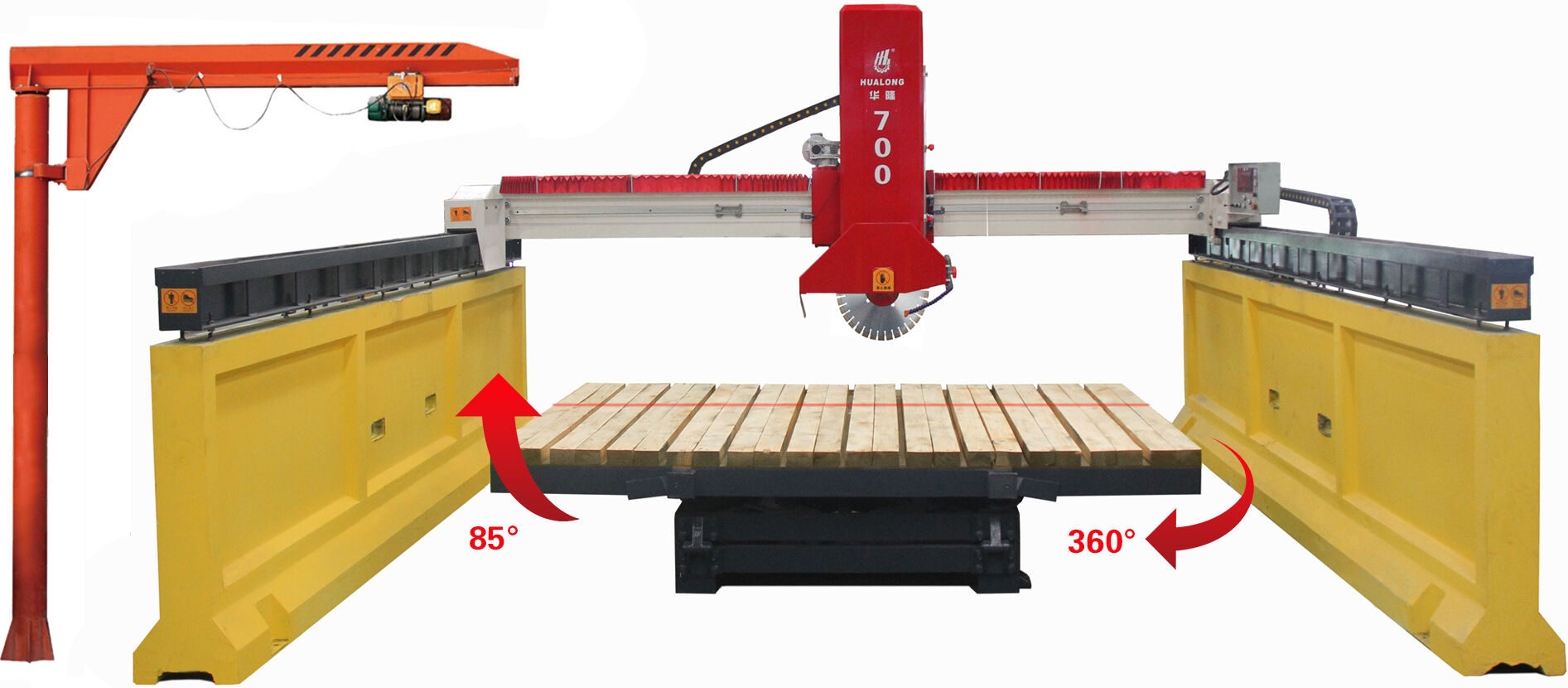
Precision is undoubtedly paramount today in stone fabrication. The production quality and direct profit margin greatly depend on precision for kitchen countertops, architectural panels, or memorial stones. CNC stone cutting machines have remarkably revolutionized stone fabrication by facilitating repeatable, automated, and highly precise cutting.
But what is the actual accuracy level of CNC machines for stone cutting in production environments? And what options do manufacturers have to maintain consistent accuracy?
In this article, you will find CNC accuracy definition, hurdles, and how Jingyang provides dependable stone cutting solutions backed by their field experience.
Learn more about the company’s background and capabilities in the
official About page:
https://www.stonemachinerypro.com/about-us
What Does CNC Accuracy Mean in Stone Cutting?
The accuracy of CNC machines gauges their conformity to the prescribed cutting tracks. In the context of stone processing, zeal for accuracy comprises:
- Linear accuracy
- Repeatability
- Edge quality
- Angle precision
- Surface smoothness
It is recognized that today’s stone CNC machines are capable of delivering an accuracy in the range of ±0.1 mm. This level of precision generally meets the requirements of professional applications.
Besides, some sophisticated multi-axis machines can get the repeatability metric down to ±0.05 mm level, thus making them feasible for the most luxurious stone fabrication endeavors.
Thanks to such accuracy, manufacturers can come up with seamless countertops, intricate curves, very close joints, and decorative stone patterns, among other things.
Why Accuracy Matters to Stone Businesses
Most of the key performance indicators (KPIs) of stone companies in Western Europe and North America are intertwined with the following:
1. Material Waste
It is a well-known fact that natural stone is costly.
Therefore, even the slightest cutting inaccuracies will cause:
- Disposal of slabs
- Extra costs for redoing
- Project lag
Material wastage during manual cutting can be as high as 5–10%.
The use of highly accurate CNC machines can bring this waste down drastically.
2. Installation Problems
Low accuracy induces:
- Uneven joints
- Seams that are visible
- Misaligned edges
Installers are compelled to spend additional hours to make corrections.
Therefore, labor costs go up.
3. Customer Complaints
At the end of the day, perfect results are what customers expect.
Some of the common complaints are:
- Uneven edges of countertops
- Slabs not fitting properly
- Insufficient finishing
Accuracy has a significant impact on one’s image.
Common Pain Points When Using Stone CNC Machines
To be honest, there are quite a few stone shops that fail to unleash the potential of CNC machines. The most common ones are:
Problem 1 – Accuracy that is not stable
At the beginning, some machines are finely cut but gradually lose their accuracy over the length of the time.
Some of the main reasons are:
- Frame structures are not strong enough
- Components are bad
- Rails are of low quality
Problem 2 – Difficult Operation
Operators may have an issue with:
- Complex software
- Having no or little training
- Language barriers
As a result, the production process is slowed down.
Problem 3 – Machine Breakdowns
The loss of time causes an enormous amount of money going out of the window.
Stone factories operate on schedules that are very tight.
The cost of unplanned failures is high.
How Jingyang Solves Accuracy Problems
Jingyang is a company that has been around for more than 30 years in the stone machinery market and is known for its worldwide equipment supply capability. Currently, their three focuses are:
1. High-Precision Machine Structure
Some of the components used by the Jingyang machines include:
- Highly rigid gantry structure
- Precision linear guides
- Advanced CNC control systems
The above-mentioned parts contribute in very significant manner to the problem of cutting stability and thus to accuracy.
High-rigidity frames are able to dampen the vibration.
It is common knowledge that less vibration is equal to a cleaner cut.
2. Advanced CNC Technology
Some features of the up-to-date Jingyang CNC systems are:
- Controllers for CNC made in Italy
- CAD/CAM integration
- Automated nesting
All of these will lead to better accuracy and higher productivity.
Thanks to the easier importing of the designs, human errors are minimized.
3. Strict Quality Testing
All machines:
- Go through a thorough check
- Have 24-hour running test
Such rigorous tests guarantee the machine performance to be operating at a high level of stability even before delivery to customers.
Such a thorough testing process significantly cuts down the number of installation problems.
Real Case Study: Countertop Factory in Germany
A midsize stone factory located in Germany traded their handsaw for a CNC machine from the Jingyang brand.
Before
There were, among others:
- Inconsistent cutting
- High waste rate
- Slow production
Manual cutting called for a highly skilled workforce.
Each time, the quality of the results was different.
After Installation
By Jingyang equipment the factory:
- Accuracy improved
- Material waste decreased
- Production stabilized
A customer shared that:
"The first thing we noticed was a sudden improvement in the cutting accuracy and a significant drop in material wastage.”
The factory took two years to pay off the investment.
Customer Reviews from Western Markets
Statements from Europe and North America corroborate the results are identical.
USA Manufacturer
A countertop manufacturer in the US states:
- Operation turned out to be quite stable
- Installation was completed by professionals
- Support received for training was good
Italian Stone Fabricator
Customer from Italy states:
- Accuracy was beyond what was expected
- Performance was stable
Germany Production Manager
A European customer reports:
- Efficiency up by 40%
- Accuracy was consistently maintained
Such type of the reviews and feedback typically correspond to the real conditions of manufacturing.
Typical Applications of Stone CNC Machines
Stone cutting CNC machines are versatile tools with applications spanning several industries.
Kitchen Countertops
Laser-sharp focus is on:
- Sink holes
- Edges
- Joints
Granite and quartz are very demanding in terms of accuracy.
Architectural Stone
Here are some applications:
- Facades
- Columns
- Panels
CNC machining is the only way to guarantee the consistency of the dimensions.
Memorial Industry
Monuments require:
- Engraving to be fine
- Shapes to be perfectly accurate
Reliable repeatability is ensured by the use of CNC machines.
Interior Decoration
Customization involves:
- Flooring patterns
- Wall panels
- Artistic stone
Complex designs are made possible through CNC.
Global Partnerships
Jingyang has customers in over 100 countries around the globe. Their projects comprise:
- Countertops in Italy
- Memorial stones in the USA
- Facades in Australia
Besides stone factories, the company also deals with:
- Contractors
- Distributors
Long-term partnership results in stable support.
How Accurate Is Accurate Enough?
For most stone shops:
±0.5 mm
Basic quality.
Works well for cheap stuff.
±0.2 mm
Professional level.
This is what most shops would require.
±0.1 mm
High-end fabrication.
Perfect for:
- Luxury kitchens
- Custom projects
A present-day Jingyang machine is considered to belong to this category.
Is CNC Accuracy Worth the Investment?
It's understandable that a number of buyers are concerned about the expense.
Nevertheless, CNC machines reduce:
- Labor costs
- Waste
- Rework
Investments in CNC shops can even be paid off within 1-2 years.
Accuracy is the key to making more profit.
FAQ – Common Questions from Western Buyers
Q1: How accurate is a CNC stone machine?
Professional machines can achieve
±0.1 mm accuracy
which is great for precision stone work.
Q2: Can CNC machines cut all stone types?
Of course.
Stone materials are commonly:
- Granite
- Marble
- Quartz
- Ceramic
Q3: Is CNC difficult to learn?
Nowadays, the user interface of the system is very friendly.
Training is normally completed in
1–2 weeks
Q4: How long does a CNC machine last?
If the machine is well looked after, then it is expected to last for
10–15 years.
Q5: Does accuracy decrease over time?
Only top-notch machines are capable of retaining the initial accuracy over the years.
Doing regular maintenance is one of the ways that really helps.
Final Thoughts
Exactly how precise would a CNC machine be for stone cutting?
Today's technology can give a level of precision in the range of ±0.1 mm thus CNC cutting can be used for industrial purposes without any problem.
Nevertheless, the precision of a machine depends on the following factors:
- The machine quality
- Parts
- Setting up
- Maintenance
Jingyang as a manufacturer is a good example of a company that:
- Precision engineering
- The strength of the R&D
- Worldwide customer care
Therefore, results are guaranteed to be stable.
Stone companies that want to increase their output and reduce their wast
Table of Contents
- What Does CNC Accuracy Mean in Stone Cutting?
- Why Accuracy Matters to Stone Businesses
- Common Pain Points When Using Stone CNC Machines
- How Jingyang Solves Accuracy Problems
- Real Case Study: Countertop Factory in Germany
- Customer Reviews from Western Markets
- Typical Applications of Stone CNC Machines
- Global Partnerships
- How Accurate Is Accurate Enough?
- Is CNC Accuracy Worth the Investment?
- FAQ – Common Questions from Western Buyers
- Final Thoughts