
 EN
EN


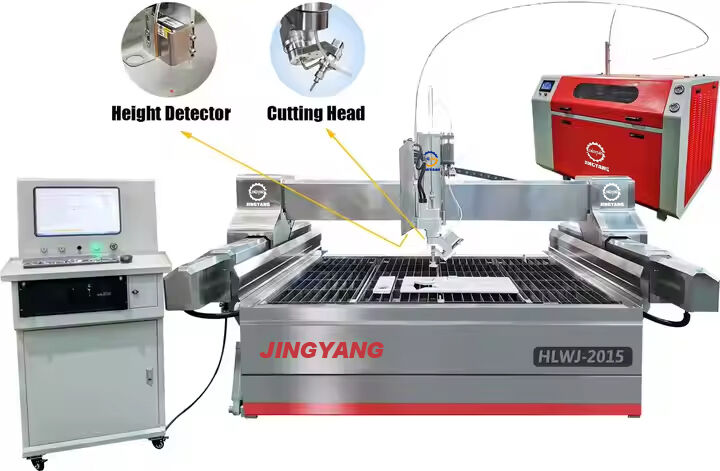
The popularity of mini water jet has grown rapidly to be favored by small workshops, hobbyists, and even startups that are in need of powerful but compact cutting solutions. One of the most frequently asked questions, however, is: Can a mini water jet machine cut metal? The answer is affirmative, but there are some significant limitations and considerations. This article covers what a mini water jet machine is, which metals can be cut by a mini water jet machine, the differences in performance between a mini water jet machine and an industrial water jet machine and if a mini waterjet machine is the best option to meet your needs.
Understanding How a Mini Water Jet Machine Works
The principle of water jet cutting is that a mini water jet machine applies a highly pressurized water stream such as water mixed with some abrasive materials like garnet to cut through materials. Regardless of the system size, the cutting power is derived from an extremely high pressure that can even go up to tens of thousands of PSI. By adding abrasives, the waterjet is turned into a tool capable of cutting hard metals, stones, and glasses.
In contrast to laser or plasma cutting which are hot cutting processes, water jet cutting is a cold-cutting process, meaning it does not produce heat. Thus, there are no heat-affected zones, warping, and metallurgical changes to the material, which is a very important advantage when the precision and material integrity are of concern.
Mini water jet machines operate on the same principle as full-size industrial units, only they are scaled-down versions. They are meant to be compact, cheaper, and capable of working with light to medium-duty tasks.
What Types of Metal Can a Mini Water Jet Cut?
A mini water jet machine can cut metal, but the metal thickness and the type of metal are the factors that determine the performance mostly. Here is what you can typically expect:
-
Thin Steel Sheets (Carbon Steel & Mild Steel)
Mini water jets are capable of cutting mild steel sheets that do not exceed several millimeters in thickness and can achieve edge cutting that is both clean and smooth. -
Stainless Steel
Stainless steel can be cut as well, but it will take longer due to the hardness of the material. It is better to use thinner gauges. -
Aluminum
Among metals, aluminum is the most convenient for a mini water jet to cut. You will find cutting speed to be fast and edges to be smooth. -
Brass and Copper
These two metals are not hard and so they are easily handled by mini water jet systems that cut them very efficiently. -
Titanium (Thin Sections)
While titanium can be cut, the cutting of titanium is mostly dependent on the pressure capacity and the abrasive flow. Only very thin titanium sections are feasible.
Typically most mini water jet machines are designed for metal thicknesses up to 10 mm, but the exact limitations depend on pump pressure, nozzle size, and abrasive feed rate.
Key Differences Between Mini and Industrial Water Jet Machines
To fully understand the capability of mini water jet machines, it’s important to compare them with full-size industrial systems:
| Feature | Mini Water Jet | Industrial Water Jet |
|---|---|---|
| Size | Compact, tabletop or small floor unit | Large, floor-mounted |
| Pressure | 20,000–40,000 PSI (typical) | 60,000+ PSI |
| Cutting Thickness | Thin to medium | Very thick |
| Power Consumption | Low to moderate | High |
| Price | Affordable | Very expensive |
| Production Volume | Low to medium | High volume |
Mini water jets are a great choice for work that requires high accuracy, laboratory work, the production of small series, education, and hobbyist fabrication. On the other side, the industrial systems are intended for heavy-duty production.
Advantages of Using a Mini Water Jet to Cut Metal
There are as many as a handful of reasons why folks choose mini water jet machines for the purpose of metal cutting:
- One of the six possible screaming benefits is that the mini water jet provides a cold cutting without the heat distortion. The metals don’t warp or harden at the edges as there is no heat involved.
-
Extreme Precision and No Roughness of the Edges
Mini water jets have the capability of performing extremely accurate cuts, particularly on thin metal sheets. -
Unbeatable Material Competence
The one and only machine can cut metal, plastic, ceramic, glass, stone, rubber, and composites. -
Green Process
There are no toxic emissions, no thermal releases, and minimal waste. -
Low Setup and Tooling Cost
There is no need for specialized cutting tools or dies. -
Small Footprint
The best place for a small workshop, university, or R&D facility.
Limitations You Should Be Aware Of
While being versatile, mini water jet machines have limitations in terms of metal cutting:
-
Limited Cutting Thickness
Most mini devices will not be able to work with heavy-duty steel plates. -
Slower Cutting Speed on Hard Metals
Compared to laser or plasma cutting, water jet cutting is slower on thick metals. -
Abrasive Consumption
The abrasives on the operating cost side that also require proper disposal add up. -
Pump Power Constraints
Lower pressure means longer cutting times for tougher materials.
For large-scale industrial type manufacturing, going for big water jet or laser cutting systems holding the advantage would still be the better choice.
Typical Applications of Mini Water Jet Metal Cutting
Mini water jet machines are widely used in:
- Prototyping and Product Development
- Custom Jewelry and Metal Art
- Electronics and Precision Components
- Automotive Small Parts Fabrication
- Educational and Research Labs
- Custom Signage and Decorative Panels
Their great adaptability enables the user to effortlessly switch from one material to another without the need for changing equipment, thereby rendering them immensely powerful in both the creative and technical sectors.
Is a Mini Water Jet Machine Right for Your Metal Cutting Needs?
In case your major objective is that of cutting metal sheets of a thin kind with the greatest accuracy, a mini water jet machine would be an ideal solution. It provides clean edges, no thermal damage, and an unparalleled material versatility. On the other hand, if your works entail thick steel plates or high-volume production, then an industrial water jet or laser cutting system is going to be more productive.
Prior to the purchase of a mini water jet, you ought to mull over the following points:
- Maximum cutting thickness required
- Types of metal you plan to cut
- Desired production speed
- Available workshop space
- Budget and operating costs
Final Verdict: Can a Mini Water Jet Machine Cut Metal?
Certainly—a mini water jet machine is capable of cutting metal, mostly thin to medium-gauge sheets of steel, stainless steel, aluminum, copper, and brass. It can hardly be thought of as a replacement of a full-size industrial system for heavy-duty tasks, but the mini water jet machine offers a great compromise in terms of precision, safety, versatility, and price.
To put it simply, a mini water jet machine is not only capable, but in most cases, it is the smartest decision for small businesses, designers, engineers, and makers who are in need of reliable metal cutting that does not require huge equipment costs.