
 EN
EN


Fabrication shops, stone processing operations, and industrial workshops view investing in a water jet cutting machine as a turning point. No matter if you are cutting stone, metal, glass, or engineered materials, a water jet stands out with precision and versatility to an extent well beyond other methods, and the heat-affected zones will be at a minimum. Nevertheless, different machines have different features, and the acquisition of a machine should be based on careful consideration of a number of technical parameters, as well as on the credibility of the supplier and support over the long term. This guide points out the most essential things to pay attention to before buying a water jet for sale and thus helps to make a good investment decision that will stand the test of time.
1. Know Your Application and Cutting Needs
Identify your cutting application and needs very clearly before you start looking at the machines on the market, which will save you a lot of time in the subsequent stages of the buying process. These are some of the questions that you should answer first:
- Type & Thickness of Material: Different materials need different treatment. Plus, thickness is also a relevant factor because some machines can cut through thicker materials than others. What type of materials are you planning to cut: stone, metals, composites, glass, or ceramics?
- Production Volume: Are you planning to produce a few pieces of fabricated parts, or will the machine be running 24/7 in an industrial production environment?
- Tolerance & Precision Requirements: Although water jets are capable of delivering a high level of precision, the rigidity of the machine and the capability of its controller contribute a lot to the achieved result.
Knowing your needs is helping you decide on the right size of the cutting table, on the power of the pump, on the type of the control system, and on compatible software. Moreover, it also keeps you from spending money on features that you are not going to use.
2. Evaluate Supplier Credibility and Manufacturer Strength
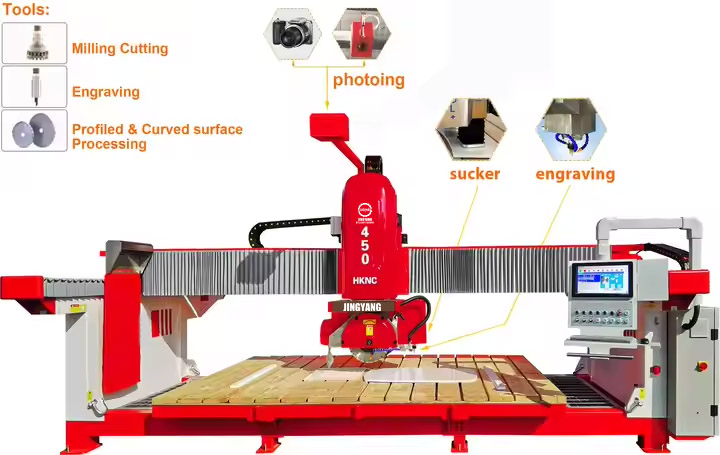
Deciding on a reputable manufacturer is equally important as deciding on the right machine. To give you an idea, here is one of the top stone machinery manufacturers - Fujian Jingyang Intelligent Equipment Manufacturing Co., Ltd on the StoneMachineryPro site. Jingyang is a stone machinery factory that has a history of more than 35 years. They have integrated design, development, production, sales, and service of stone processing equipment including waterjet cutting machines. Their modern manufacturing plant includes a territory of 50,000 square meters and the company holds multiple international blending of quality certifications of which ISO9001:2015, ISO14001:2015, and CE certification are most representative. These certifications are an indication of the company's commitment to quality and environmental compliance.
Choosing a supplier backed by real R&D and with the ability to serve clients worldwide is like having an engineering expert, efficient manufacturing, and extensive after-sales support at your disposal. A perfect example is Jingyang whose equipment is sold in more than 100 countries worldwide.
3. Machine Build Quality and Certifications
Examine the construction thoroughly when you are inspecting any water jet cutting machine for sale:
- Frame Structure: A strong and well-engineered frame can withstand the vibrations generated during the cutting process thereby producing more precise cuts.
- Power Unit: Pumps and Intensifiers constitute main components in the system. Therefore, it's recommended to settle down with high-quality brands that are equipped with robust seals.
- Certificates: If a machine has got proper certification of safety and quality such as CE, ISO, or other regional level, then it can be taken for granted that the machine’s performance and reliability are guaranteed.
- Production Files: Ask the supplier for comprehensive documentation such as test reports, quality control records, and material traceability.
A well established brand is always associated with a record of continuous quality checking and testing. This is in fact standard practice for many manufacturers, and factory acceptance test (FAT) documentation comes as a proof that the manufacturer's specifications are fulfilled.
4. Cutting System and Pump Technology
A fundamental technical choice is associated with the high-pressure pump. On this point, the popular two options are:
- Intensifier Pumps: By hydraulically pressing these pumps, they are able to obtain very high pressures. One of the benefits that they provide is that they make very smooth cuts; however, in general, these types of pumps require more maintenance and have more moving parts.
- Direct-Drive Pumps: These kinds of pumps are often more durable, require less maintenance, and, consequently, are more efficient; however, they usually come at a higher price.
Whichever pump you choose, make sure the maintenance intervals you expect, the parts supply, and the overall cost of owning the pump are all within your budget and fit your working habits.
5. Software, Control System, and User Interface
It is not unreasonable to say that a water jet machine is mainly judged by its control system. Nowadays, CNC control software has become very user-friendly and at the same time allows path programming with a very high level of dexterity. Besides, it can easily interface with CAD/CAM. It is crucial that the features of the machine control and its user interface meet the following:
- Convenience of Use: Does your operator find it easy to operate the control panel? Is the interface naturally learned by them?
- Compatibility of Software: Can the design software which is used in your company be supported by this system/operation software?
- Possibility of Upgrades: In case some new features are introduced in the future, will it be possible to update the controller in order to get the latest functionalities?
Subsequently, the good software of the machine will enhance the productivity and will, at the same time, minimize the amount of time spent on the training of the operators thus the overall result will be faster switching from the design phase to the actual cutting.
6. Inspection and Testing Prior to Purchase
If you can, personally inspect the equipment even if there has been an intensive online communication and exchanges of pictures or videos with the manufacturer. And, if location is a problem, at least do an inspection via video call. Among the issues on which to focus during inspection are:
- Pressure Section: The tightly fitting of the high-pressure seals and hoses ensures that no leakage or wear develops.
- Water Jet orifices: Take a very close look at the water or abrasive jet nozzles and make sure they are not damaged or cracked.
- Control Cabinet: It should be clean and orderly; wiring should be in good condition without any sign of rushed or careless work.
- Performances: Ask for test cuts and videos, or try the sample pieces yourself to evaluate whether the performance in cutting your specific materials is good.
If your inspection is arranged through a third-party company like SGS or TÜV, you will get a very objective report which will be very helpful especially if it is a cross-border purchase.
7. Availability of Spare Parts and Service Support
Don't undervalue the role of after-sales service. The majority of the cases, buyers are mostly concerned with the specifications and the price of the equipment; however, a good service network for the equipment that you have purchased is overlooked by them. Unfortunately, in some areas of the world, there is a shortage of local technicians or obtaining replacement parts for the equipment may take a long time, hence leading to equipment failures going on for long periods of time, thus resulting in production schedules being severely impeded or even worse, in the loss of profits.
Strong manufacturer networks, whether through direct service centers or a trained distributor, give you confidence that you can start your:
- replacement of nozzles and seals
- pressure pump component replacement
- software and controller upgrade
- teaching and troubleshooting
Companies having a global sales network and local support partners will very often be the ones that bring you the most trouble-free ownership experience.
8. Total Cost of Ownership and Operating Resources
Simply putting the price on a price tag does not tell you the whole story when you are budgeting for a waterjet cutting machine. Here are some more things that you should take into account:
- Installation and Training: Will you have it set up by the professionals? Will they also provide you with the training of the operators or are you going to do it yourself?
- Consumables: Abrasives like garnet must be readily available and affordable.
- Maintenance Expenses: Maintenance expenses include not only consumables wear parts but filters and routine servicing.
- Waste Management: Schlieren and waste abrasive are produced by abrasive water jets and have to be properly disposed of.
If you estimate costs realistically, your investment will be part of your long-term financial plan rather than a surprise.
9. Safety, Water Quality, and Environmental Considerations
A non-negotiable aspect of water jet operation is the safety component, given that they operate at very high pressure. It should be a prerequisite that the machine has the following:
- Safety interlocks and emergency stops
- Protective guarding around high-pressure components
- Operator training materials
On the other hand, water quality is also a factor to consider. The chemical composition of the water, such as total dissolved solids and hardness, greatly affects pump durability; therefore, analyzing the water source before installation can save expensive parts.
As far as environmental issues are concerned, besides proper waste water and abrasive particle disposal, special attention should be paid when cutting hazardous materials.
10. Warranty and Contract Terms
Last but not least, a transparent warranty and purchase agreement will definitely safeguard your investment. Some of the key points include:
- Period and Scope of the Warranty
- Availability of Technical Support
- Return and Service Remedies
- Shipping and Installation Arrangements
When a deal is made with international suppliers, it is absolutely necessary to read terms and conditions carefully and thoroughly.
Conclusion
By following these tips purchased a water jet for sale may no longer be a giant step in the dark, but a quite straightforward and satisfying venture. From setting the production requirements to checking the manufacturer’s creditworthiness, the verification of machine quality, the software aspect, and the service support, to the operating costs, and lastly, but most importantly, the environmental requisites—assessment of all of these will ensure a purchase bundle that will return to you in the form of precision, reliability, and value for money for a long time.
A water jet machine carefully selected according to your needs will be a perfect partner that not only enhances your cutting skills but also helps raise productivity and efficiency of your workshop to a new level.
Table of Contents
- 1. Know Your Application and Cutting Needs
- 2. Evaluate Supplier Credibility and Manufacturer Strength
- 3. Machine Build Quality and Certifications
- 4. Cutting System and Pump Technology
- 5. Software, Control System, and User Interface
- 6. Inspection and Testing Prior to Purchase
- 7. Availability of Spare Parts and Service Support
- 8. Total Cost of Ownership and Operating Resources
- 9. Safety, Water Quality, and Environmental Considerations
- 10. Warranty and Contract Terms
- Conclusion