
 EN
EN



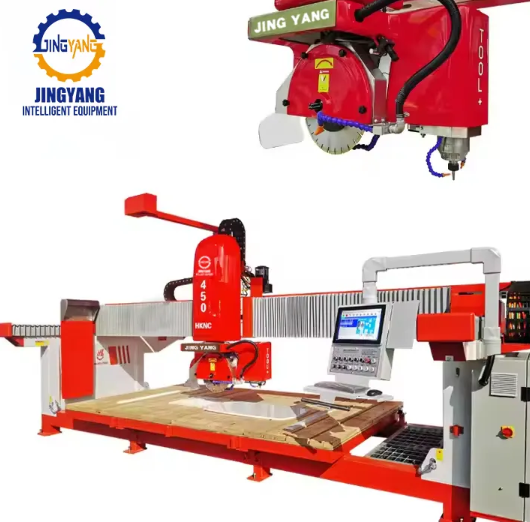
Core Operational Principles of Quarry Saw Machines
Mechanical Force Transmission and Blade Kinematics
Quarry saw machines convert rotational energy from a diesel engine or electric motor into controlled cutting force through a precision power train—comprising gears, belts, and drive shafts. This system transforms high-speed, low-torque output into the optimal peripheral blade velocity for efficient rock fracturing. Blade kinematics govern performance: the interplay of rotational speed, depth of cut, and feed rate determines how diamond segments engage the stone matrix. Synchronizing these parameters minimizes heat accumulation, maintains consistent kerf width, and supports downstream processing efficiency.
Hydraulic vs. Electric Drive Systems in Modern Quarry Saw Machines
Drive selection shapes operational priorities—hydraulic systems deliver high torque at low speeds, excelling in initial cuts through dense stone and absorbing shock loads to protect blades. Their self-contained design suits remote quarries with unreliable grid access. Electric drives offer superior energy efficiency (85–95% mechanical efficiency versus 70–80% for hydraulics), precise speed control, quieter operation, and reduced maintenance—making them the preferred choice where stable electrical infrastructure exists.
Tension Control and Blade Tracking for Precision Cutting
Maintaining blade flatness and alignment is critical for dimensional accuracy. Tension control applies calibrated tensile force: insufficient tension causes wobble and inconsistent kerfs; excessive tension risks fatigue or cracking. Blade tracking systems—using hydraulic or electromechanical actuators—continuously monitor lateral position via high-resolution sensors, correcting deviations in real time. This closed-loop capability sustains straight cuts within sub-millimeter tolerances despite uneven blade wear, directly improving block yield and reducing material waste.
Step-by-Step Operation Workflow of Quarry Saw Machines
Material Positioning, Calibration, and Kerf Alignment
Precision begins with secure, immobile positioning of stone blocks—achieved via vacuum systems or engineered clamps—and laser-guided calibration to verify alignment against digital plans. Kerf alignment ensures the blade path matches intended dimensions before engagement. Operators confirm trackway clearance and tension settings to prevent side-load-induced drift. Advanced systems calibrate offsets at millimeter-per-second feed rates, accounting for structural layer variations.
Geological assessment informs strategy: fissures or hardness anomalies require adjusted entry points and localized support. Digital interfaces integrate CCD camera feedback to track blade centerlines against reference markers, while pre-cut water cooling stabilizes thermal expansion in guide assemblies—preserving alignment integrity.
Blade Engagement Sequence and Feed Rate Modulation
Blade engagement follows a staged acceleration protocol—gradually ramping driveshaft RPM to full operating speed before contact—to avoid abrupt stress that triggers segment loss or core fractures. Feed rate is dynamically modulated using programmable logic controllers, calibrated to rock density: materials exceeding 2.8 g/cm³ typically require 60–70% lower feed rates than softer limestones. Uniform chip formation signals optimal engagement depth, usually 20–40 mm per pass depending on mineral abrasiveness.
Vibration sensors feed real-time data into automated harmonics adjustments. Downfeed pressure is tuned to material behavior—higher forces stabilize coarse aggregates; reduced pressure prevents micro-crack propagation in brittle crystalline stone. Coolant delivery synchronizes with cutting speed at ~1.5 L/min per cm of cut depth, balancing thermal management with abrasion resistance. Continuous debris removal ensures uninterrupted diamond–rock contact geometry throughout each duty cycle.
Cutting Performance Factors: Rock Integrity to Cut Quality
Rock integrity—defined by hardness, density, and internal fracture patterns—directly governs cut quality and machine responsiveness. Variations across geological strata demand adaptive operational strategies to maintain precision and tool longevity.
Fracture Mechanics and Abrasive Wear Dynamics
Fracture mechanics describes how blade force initiates and propagates cracks through the rock matrix: harder formations require greater energy input, while brittle structures risk unpredictable chipping. Abrasive wear dynamics reflect the erosion of diamond segments during contact with siliceous particles—a process accelerated by thermal stress and improper coolant flow. Optimizing blade speed, feed rate, and coolant volume balances fracture efficiency against segment wear, extending tool life without compromising cut fidelity.
Optimizing Efficiency and Safety in Quarry Saw Machine Operation
Diligent preparation and continuous oversight underpin both productivity and personnel safety.
Pre-Operational Checks and Real-Time Monitoring Protocols
Each shift begins with inspection of blade integrity, coolant levels, and drive system pressures. Integrated vibration sensors and thermal gauges provide early-warning alerts to the control room, enabling proactive intervention before failures occur. Paired with routine operator training—including emergency shutdown procedures—these protocols reduce unplanned downtime, extend equipment service life, and uphold rigorous occupational safety standards.
Frequently Asked Questions (FAQ)
What are the main types of drive systems used in quarry saw machines?
Quarry saw machines typically use hydraulic and electric drive systems. Hydraulic systems are ideal for dense stone cutting and remote operations, while electric drives offer energy efficiency, precise control, and low maintenance.
How does tension control benefit cutting precision?
Tension control ensures the blade remains flat and aligned during cuts. Proper calibrated tensile force prevents wobbling or cracking, maintaining dimensional accuracy and prolonging blade life.
Why are geological conditions important for operation?
Geological conditions influence cutting strategies. Hardness or internal fractures in stone require adjustments in blade speed, engagement points, or feed rate to ensure optimal performance and tool longevity.
What safety protocols are essential before operating quarry saw machines?
Operators should inspect blade integrity, coolant levels, and drive systems before starting. Real-time monitoring with sensors and training in emergency procedures help maintain safety and reduce downtime.