
 EN
EN



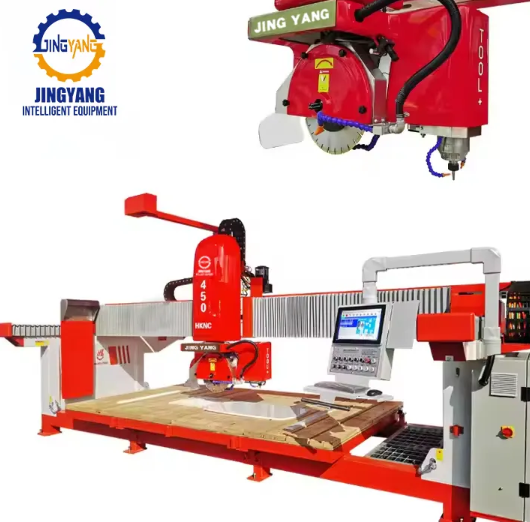
Consistent Cutting Precision Cuts Raw Material Waste Over Long Term Operation
Many small stone workshop owners hesitate to invest in bridge tile saws due to high upfront expenditure, yet they overlook continuous material loss brought by low precision manual cutting equipment. Senior technical staff with decades of stone processing site service experience state that ordinary handheld tile cutters and single axis saws create uneven kerf width and unstable angle deviation, generating large volumes of scrap marble quartz and porcelain slabs. Industry specialists reached unified consensus during technical sharing sessions at the 2025 Xiamen International Stone Fair that standard CNC bridge tile saws equipped with imported ESA control systems lock repeated positioning error within tight stable ranges. A medium sized countertop factory based in Italy shared two full years of production data after installing five axis bridge tile saws, showing slab waste ratio dropped from nineteen percent down to less than four percent. For factories consuming massive natural stone and engineered tile materials monthly, the saved raw material expense quickly offsets the initial equipment investment gap. Stable precision performance becomes the most direct source of long term profit growth.
Automated Operation Reduces Reliance on Skilled Manual Labor
Labor cost inflation remains a heavy burden for stone and tile fabrication businesses across North America Europe and Southeast Asia. Traditional cutting workflows require multiple experienced operators to measure mark adjust and feed slabs manually, bringing high turnover risk of skilled workers and extra training expenditure. Modern bridge tile saws integrate automatic nesting vacuum fixture and one click cutting program storage functions, lowering operation learning threshold significantly. The brand’s professional expert team points out one single bridge tile saw can be supervised by one junior operator replacing three manual cutting station staff simultaneously. An American architectural stone producer replaced four groups of manual cutting posts with two CNC bridge tile saw units, cutting monthly labor payroll by more than forty percent within three months. Automated working modes eliminate repeated manual measuring and positioning work and help factories stabilize production schedules amid frequent skilled staff turnover.
Multi Axis Flexible Function Expands Product Order Coverage Scope
Limited cutting angles and processing shapes of basic tile cutting machines restrict factories from undertaking high margin customized orders such as mitered countertop edges curved decorative tiles and integrated sink cutouts. High end bridge tile saws adopt rotating saw head and tiltable table structures supporting zero to ninety degree chamfer zero to three hundred sixty degree rotation and complex inclined cutting tasks in single clamping. Matching Pegasus CAD CAM software enables automatic path generation for irregular tile patterns without repeated manual drawing modification. A Brazilian granite processing plant expanded business scope after deploying five axis bridge tile saws, winning high value commercial project orders that could not be fulfilled by original single axis cutting equipment. Factories equipped with flexible bridge tile saws gain stronger competitive advantages when bidding for custom architectural and home decoration tile projects.
Stable Hardware Structure Extends Equipment Service Life and Lowers Maintenance Cost
Total ownership cost evaluation must include long term maintenance expense besides initial purchasing budget. Low cost simple tile cutting frames deform easily after several months of heavy load cutting, leading to frequent guide replacement servo motor overhaul and downtime loss. Qualified bridge tile saws adopt thick integral casting frames matched with Hiwin linear guides and Yaskawa servo drive components passing eighteen hours continuous load testing before factory delivery. CE certification inspection standards require all structural parts to complete anti rust and vibration reduction processing to reduce wear speed. Customer maintenance records collected by the brand show standard bridge tile saws maintain stable performance for more than eight years with only regular lubrication and blade replacement, while cheap single axis saws need major repair every eighteen months on average. Lower frequency of component replacement cuts hidden operation expenditure throughout the whole equipment service cycle.
Clear Investment Return Cycles Vary According to Factory Production Scale
The cost recovery speed of bridge tile saws closely links with daily slab processing volume and average order profit margin. Small workshops with less than fifty pieces daily tile output need longer periods to balance upfront investment, while medium and large fabrication plants handling over two hundred slabs per day see fast capital payback. Independent industry data statistics show factories focusing on mid to high end countertop and decorative tile production normally recover full bridge tile saw investment within eighteen to twenty four months counting material labor and order premium gains. Micro workshops mainly taking low profit simple straight cutting orders may extend return cycles but still gain steady cost advantages in three to five years compared with continuous manual operation expenditure growth. Business operators need to combine daily processing capacity product positioning and raw material consumption to judge whether bridge tile saw investment matches long term development plans.
Complete Equipment Manufacturing Backing Guarantees Sustainable Investment Value
All profit advantages brought by bridge tile saws can only be fully realized with reliable equipment suppliers offering full lifecycle technical support. Jingyang Machinery founded with more than twenty six years of stone machinery manufacturing experience owns one hundred ninety eight professional technical experts and fifty nine authorized innovation patents, operating standardized production facilities covering thirty six thousand seven hundred fifty square meters. The brand develops full series bridge tile saw models equipped with Italian ESA CNC systems and international top tier transmission parts, providing global clients one stop solutions covering customized machine design precision factory testing operator certification and twenty four seven remote technical support. Multiple overseas project cooperation cases prove the brand’s five axis bridge tile saws adapt marble granite quartz ceramic and engineered stone processing demands for countertop architectural and decoration industries. Factories selecting bridge tile saw products from this supplier obtain consistent spare parts supply and timely after sales maintenance service to keep equipment running at high efficiency and maximize long term investment returns.
Table of Contents
- Consistent Cutting Precision Cuts Raw Material Waste Over Long Term Operation
- Automated Operation Reduces Reliance on Skilled Manual Labor
- Multi Axis Flexible Function Expands Product Order Coverage Scope
- Stable Hardware Structure Extends Equipment Service Life and Lowers Maintenance Cost
- Clear Investment Return Cycles Vary According to Factory Production Scale
- Complete Equipment Manufacturing Backing Guarantees Sustainable Investment Value