EN



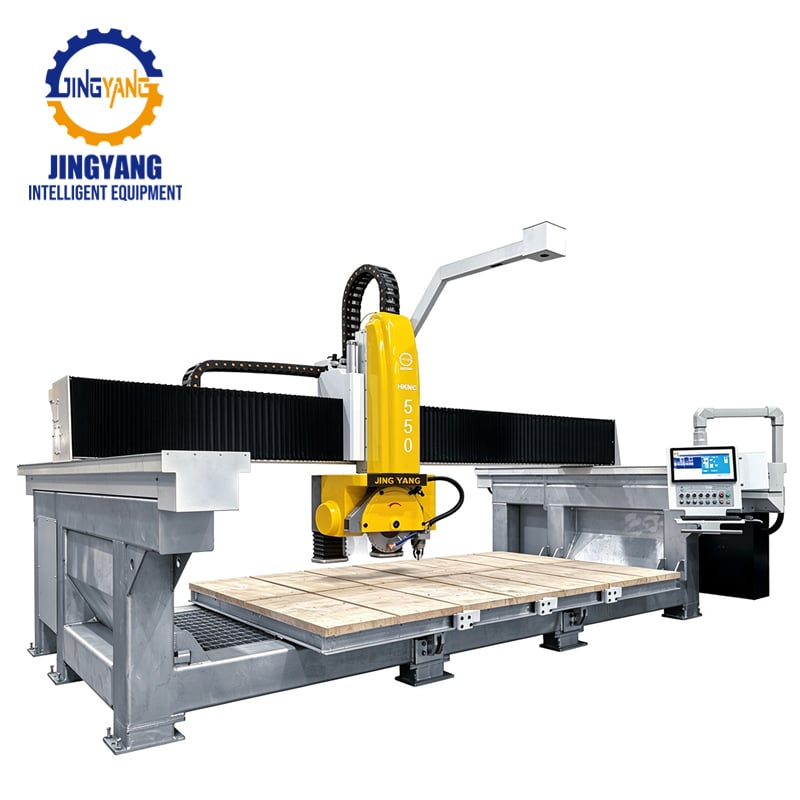
Evaluating a stone cutting machine price requires balancing structural positioning accuracy, continuous spindle motor power, and daily plant throughput. This engineering valuation guide breaks down the true stone cutter machine price, audits hidden mechanical cost drivers, and provides a clear framework to compare each stone cutting machine price against your production targets, preventing expensive capital misallocation across natural granite, engineered quartz, and ultra-compact sintered stone slabs.
Deconstructing Positioning Accuracy and Mechanical Rigidity Against Pricing
When auditing an initial quotation, the structural build quality of the chassis dictates the baseline stone cutting machine price. An entry-level machine built on lightweight, hollow structural steel tubes might present an attractive headline quote. However, these thin frames flex under dynamic cutting loads. As mechanical forces travel through the crossbeam, micro-deflections distort the cut line, turning tight kitchen countertop joints into mismatched seams that demand costly manual grinding.
A high-accuracy CNC stone cutting machine price reflects heavy, stress-relieved steel fabrications or solid cast-iron bridge uprights. Thermal annealing relieves internal material stresses generated during welding, ensuring the machine bed maintains structural parallelism across years of continuous operation.
Positional guidance systems also create clear pricing divisions across equipment tiers:
- Basic linear guide setups: Economy machines often feature undersized recirculating ball carriages that wear rapidly in wet stone environments, causing backlash and carriage play within twelve months.
- Heavy preloaded roller ways: Precision bridge saws incorporate wide, hardened cylindrical roller guides with high dynamic load capacities, maintaining rigid tool tracking during aggressive blade plunge cycles.
- Direct feedback linear scales: Standard machines rely on indirect rotary encoders mounted to the back of servo motors, which cannot register physical mechanical wear. High-precision machinery utilizes sealed absolute linear optical scales mounted directly to the machine axes, reading the exact mechanical position of the bridge in real time.
- Harmonic kinematic gearboxes: In 5-axis articulated cutting heads, zero-backlash harmonic drives maintain precise angular positioning during compound 45-degree miter cuts, preventing edge chipping on brittle porcelain panels.
Investing in dynamic accuracy directly reduces slab scrap rates. A higher initial machine quote easily pays for itself by eliminating ruined, expensive quartzite slabs and cutting edge-polishing rework times across your plant floor.
Auditing Spindle Drive Power and Continuous Cutting Torque
Spindle dynamics form the second major pillar governing an industrial stone cutting equipment price. A common trap in basic machinery brochures is quoting peak motor horsepower rather than continuous S1 duty-cycle electrical ratings. A low-cost motor rated for intermittent loads bogs down when forced to push a large circular diamond blade through dense, three-centimeter granite slabs.
When assessing a granite cutting machine price, verify whether the spindle utilizes a standard alternating current induction motor or a high-torque permanent magnet variable-frequency system. Inverter-driven main drives maintain flat, continuous torque across their entire operational RPM spectrum. This electrical capability allows machine operators to spin large diamond blades at moderate RPMs with maximum penetration force, or ramp up rotational speeds to drive small-diameter diamond finger bits and core drills cleanly through dense stone matrices.
Spindle transmission engineering also explains wide variations in a bridge saw machine price:
- Direct-drive integrated arbor: The circular diamond blade mounts directly onto the oversized shaft of an inverter-duty motor, eliminating belt slippage, dampening vibration harmonics, and transferring 95% of motor energy straight into the stone face.
- Heavy-duty mechanical gearboxes: For operations processing thick monument granite or massive building stone blocks, heavy reduction gearboxes multiply low-end shaft torque, preventing motor stalling during deep step-down cutting passes.
- Sealed arbor bearing assemblies: Industrial cutting spindles feature matched pairs of high-precision angular contact spindle bearings enclosed within sealed oil or grease baths, preventing abrasive stone slurry wash-out and runout drift.
A properly powered spindle motor prevents blade glazing, optimizes peripheral diamond segment wear, and delivers fast linear feed rates that keep your cutting stations operating at maximum speed.
Aligning Machine Automation with Real Production Volume Needs
Production capacity requirements dictate whether an entry-level bridge saw or an automated processing cell delivers the best return on investment. Purchasing complex machinery with unused capabilities ties up working capital, while underestimating volume requirements creates severe operational bottlenecks.
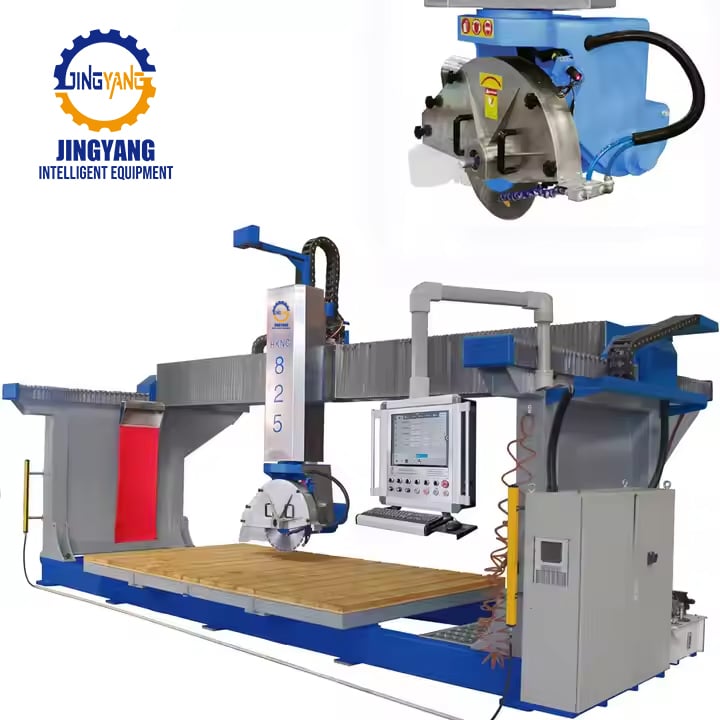
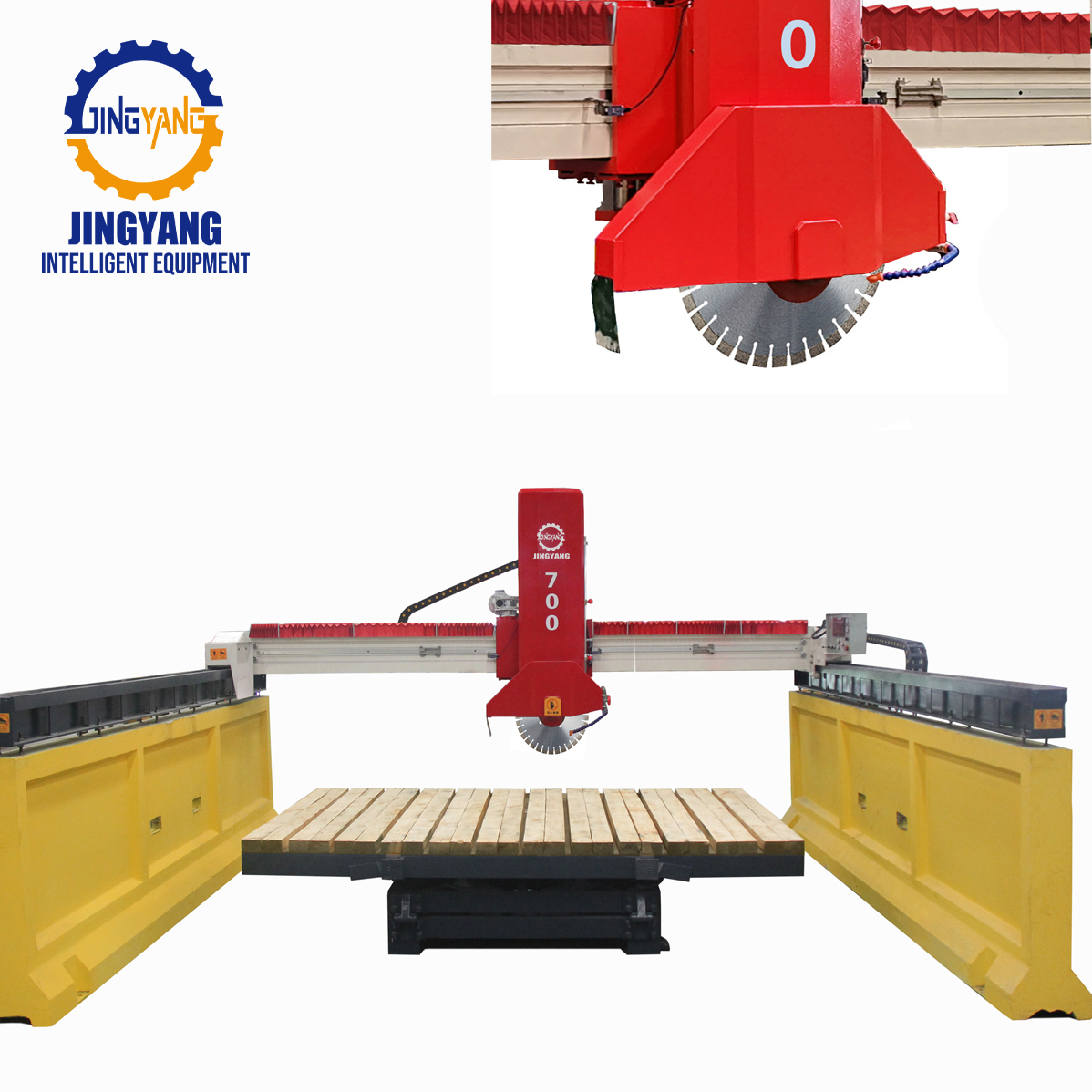
A standard 3-axis or 4-axis bridge cutter serves operations processing simple dimensional paving stones, basic window sills, and straight rectangular cladding panels. These standard platforms offer an accessible capital entry point, but they rely heavily on manual operator intervention to turn slabs, set mechanical fences, and reposition workpieces for intersecting cuts.
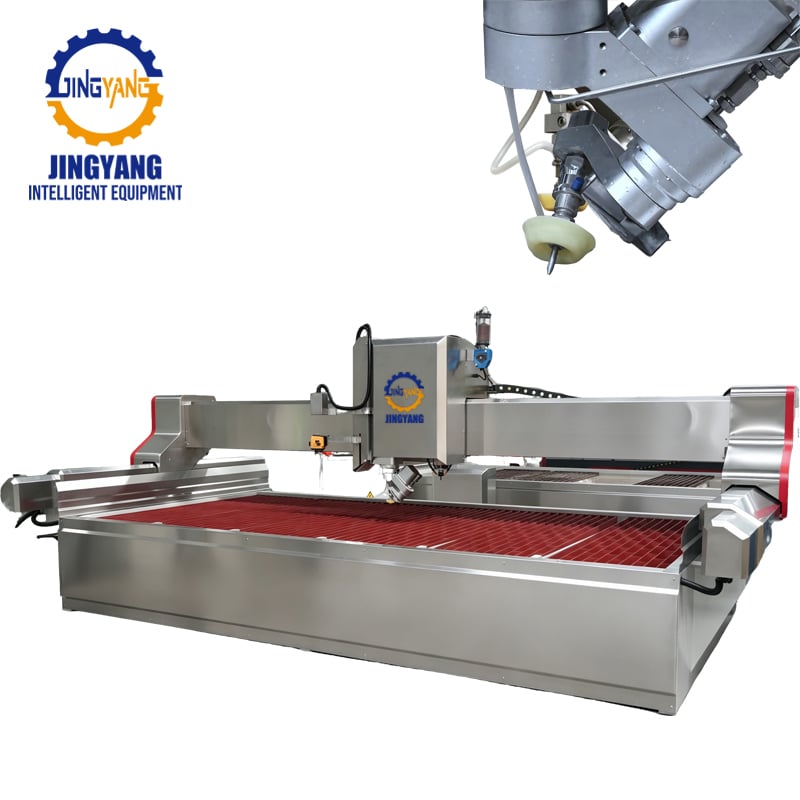
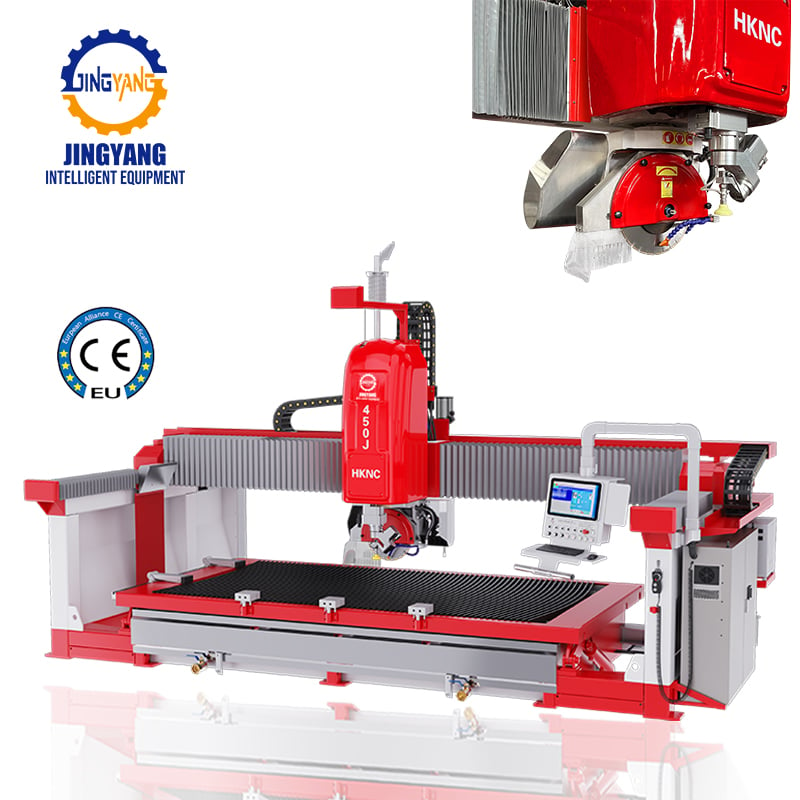
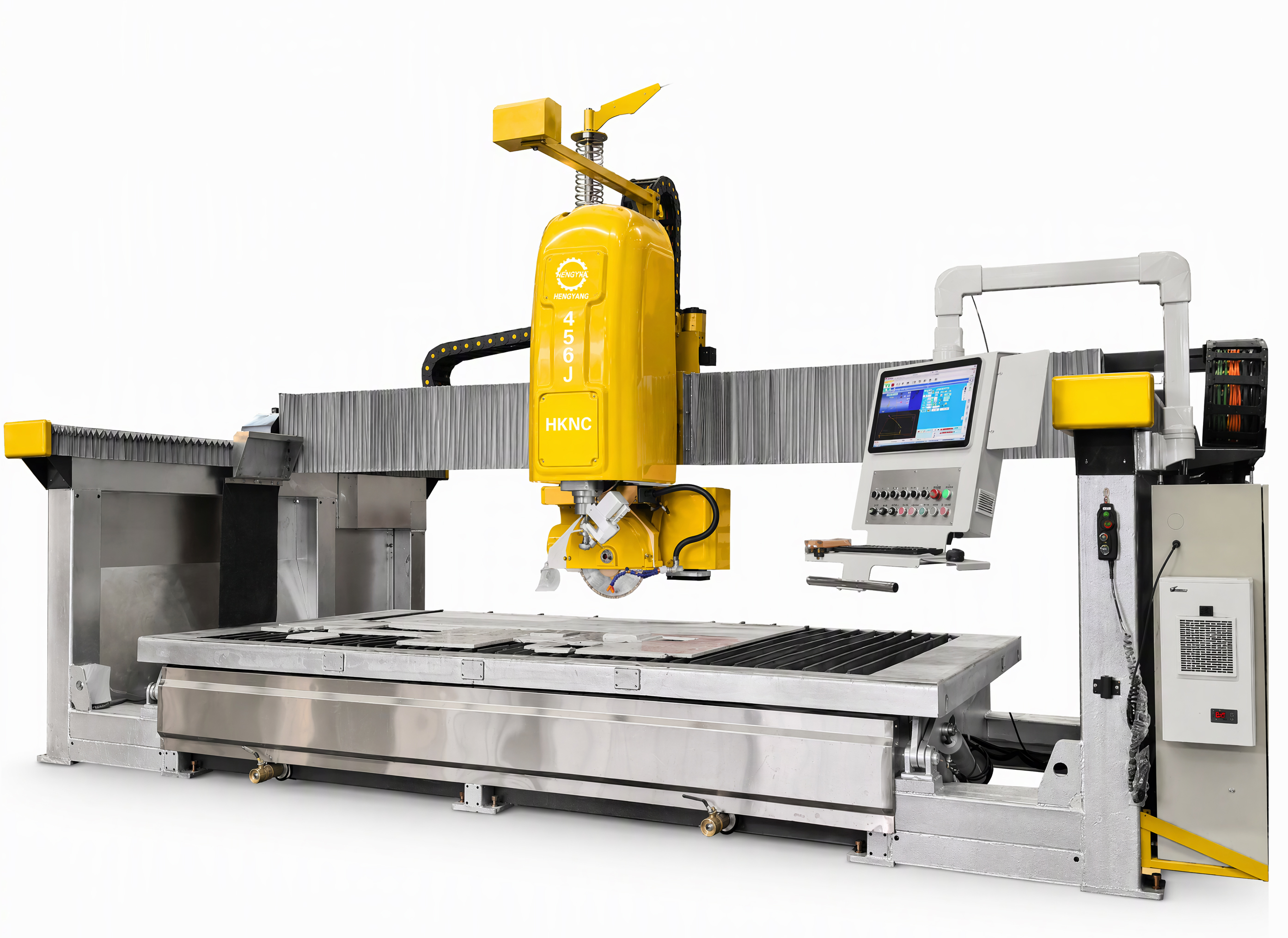
For fabricators targeting 50 to 150 square meters of custom countertops daily, a 5-axis CNC saw workstation becomes necessary. These units combine automated head rotation, variable-angle miter capabilities, and dedicated routing arbors. Incorporating overhead slab-imaging cameras and parametric kitchen software allows operators to ingest digital field measurements and nest complex kitchen layouts in minutes.
High-throughput fabrication facilities processing hundreds of square meters per shift require dedicated industrial automation cells. These advanced configurations feature automated hydraulic tilting tables, motorized slab-shuttle exchange stations, and integrated overhead vacuum manipulator lifters. The robotic vacuum pads automatically lift and shift freshly cut blanks away from the saw path mid-cycle, enabling continuous orthogonal cross-cuts without stopping the main spindle.
Selecting equipment matched to your order profile ensures your investment directly addresses shop bottlenecks, keeping operational costs low while maximizing daily square-meter output.
Hidden Operating Expenses: The True Cost Beyond Purchase Price
Looking strictly at equipment purchase figures ignores the recurring operational costs that determine the true value of any cutting machinery. A bargain headline quote often masks low-grade internal components that drive up maintenance overhead and inflate tooling consumption.
Diamond tooling wear represents a significant running expense. When an underpowered machine chatters as it travels along the cut path, the diamond matrix suffers dynamic impact shocks instead of smooth abrasive shear. This mechanical instability fractures diamond crystals prematurely, increases monthly segment replacement costs, and leaves rough, jagged cut faces that require extensive post-processing grinding.
Utility consumption and site infrastructure also shift lifetime operational costs:
- Electrical energy efficiency: High-efficiency servo drives and inverter-controlled hydraulic power units reduce sustained electrical draw during idle and cutting cycles.
- Cooling water management: Precision internal coolant manifolds target the active diamond cutting zone directly, reducing required water flow rates while extending segment life.
- Component availability: Standard industrial metric hardware—such as off-the-shelf pneumatic solenoid valves, standard optical proximity switches, and standard guide bearings—prevents expensive long-term vendor lock-in.
Evaluating complete ownership expenses reveals whether a lower initial equipment figure offers genuine economic value or simply defers expenses into frequent repairs, excessive utility bills, and lost production capacity.
Manufacturing Pedigree and Practical Factory Infrastructure
Industrial stone cutting machinery must operate dependably within wet, abrasive manufacturing environments. Machinery assembled by fabricators without extensive field experience often reveals weak seals, undersized structural bearings, and fragile electrical cabinets that struggle during continuous multi-shift production.
Leveraging extensive engineering and manufacturing expertise across large-scale quarry extraction machinery and intelligent stone fabrication systems, Jingyang Machinery designs its equipment with rigid cast structures, heavy-duty linear motion guides, and reliable electronic CNC systems. Because Jingyang manufactures complete stone processing machinery lines, its equipment is built from the ground up to endure severe stone slurry exposure and relentless daily production duty cycles.
When evaluating competitive machinery builders, review the actual manufacturing footprint and quality control protocols of the factory. Inspect whether the builder uses certified stress-relieving ovens for their structural steel frames, employs high-precision laser interferometers to calibrate axis pitch errors, and provides stable, long-term technical support. Working with a dedicated machinery manufacturer ensures you receive reliable engineering guidance, accessible spare parts inventory, and direct factory technical service throughout the operational life of your equipment.
Final Purchasing Framework: Measuring Real Capital Value
Navigating the equipment market requires looking past promotional discounts to conduct an objective, data-driven comparison of structural engineering, motor drive torque, and motion automation.
Before committing capital, verify the following core specifications across your shortlisted supplier proposals:
- Verify structural frame integrity: Confirm whether the machine bridge uses stress-relieved heavy steel plate or dense cast iron, and check the dynamic load capacity ratings of the linear guide blocks.
- Audit continuous motor power ratings: Check that motor horsepower reflects continuous S1 industrial duty ratings rather than short-burst peak outputs, ensuring adequate torque for dense natural granites and hard quartzites.
- Assess integrated software usability: Evaluate whether the CNC operating system includes intuitive parametric templates, DXF importing tools, and digital vein-matching capabilities that streamline daily programming tasks.
- Audit the complete delivery scope: Ensure the equipment quotation includes necessary support gear, such as hydraulic slab-tilting mechanisms, automatic lubrication systems, and digital tool pre-setters.
Comparing a commercial stone cutting machine price requires looking past superficial quotes to evaluate positional accuracy, sustained motor power, and long-term mechanical reliability. Investing in well-engineered stone cutting equipment protects your shop against broken slabs, inaccurate miters, and costly operational downtime.
Contact Jingyang Machinery today to discuss your daily output targets, target slab materials, and workshop layout specifications. Our stone equipment specialists will deliver a detailed technical quote and production analysis matched directly to your business goals.