
 EN
EN


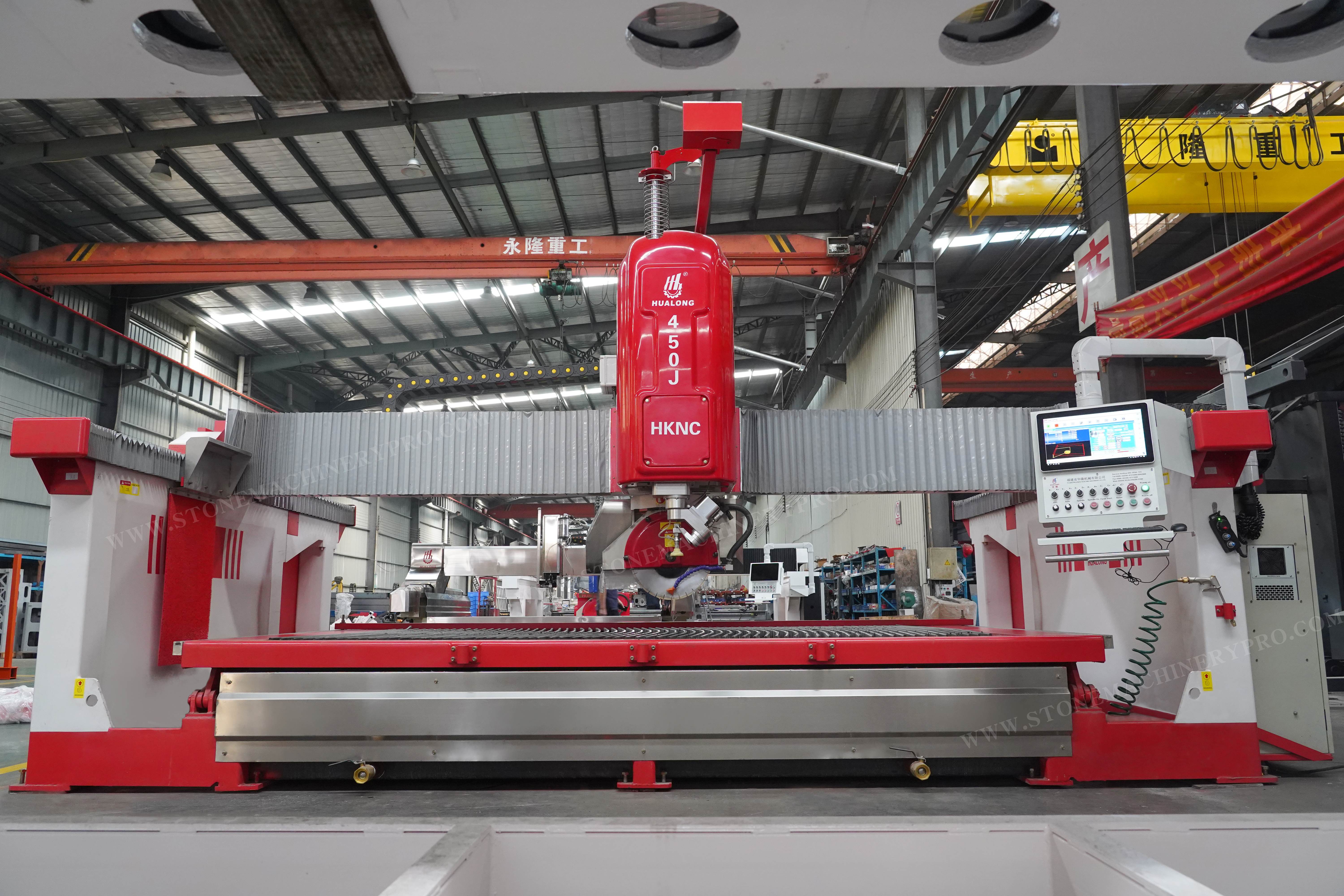
Speed in a typical stone fabrication workshop of today is not just a matter of comfort - it is what sets you apart from the competition. No matter if the shop is working with granite countertops, quartz, marble vanities, or solid surface materials, the one who will be able to show the fastest and the most accurate sink cutouts will ultimately be the most productive and profitable. Conventional ways such as manual routing or hand-guided saws are not only slow, but also inconsistent and require a lot of work. This is the point where the CNC sink cutout machine comes in and changes the whole process.
A CNC (Computer Numerical Control) sink cutout machine automates the entire molding, splitting, and finishing process for sink openings. By marrying digital programming with fast mechanical cutting, these units achieve a level of efficiency that is practically unrivaled. But in what way do they actually enhance speed? Here are the main ideas that explain why CNC sink cutout installations are so much quicker than manual or semi-automatic ones.
1. Automated Digital Programming Gets Rid of Manual Layout Time
When fabricating stone manually, the technicians have to measure, mark, and recheck the sink opening each time. This can take 20 to 40 minutes per countertop.
Everything a CNC sink cutout machine does can be done in a fraction of the time. The worker only needs to import a digital template - most often it is a DXF file supplied by the sink manufacturer - into the machine’s software. The CNC system itself comes up with the cutting path.
No manual marking. No risk of measurement errors. No time wasted on layout corrections.
The outcome is instant: the device can initiate cutting within a very short time after slab loading and program selection.
2. High-Speed Cutting Tools Shorten the Actual Cutting Time
CNC equipment is powered by high-frequency spindle motors and diamond-based tools. These tools operate at speed levels that are much higher than those of hand routers or water-cooled hand saws. The majority of CNC units run at 8,000–10,000 RPM, with the cutting feed rates being controlled by a computer.
The advantages of the same are:
- Quicker removal of stone material
- More precise cuts leading to less follow-up polishing
- Consistent speed kept throughout the cut
If the cutting is done manually, the process slows down and the person becomes tired and more cautious when it comes to the corners or curves. CNC machines behave in a different way. By having the cutting speed and pressure uniform, they are able to finish sink cutouts in a very short time
3. Multi-Axis Movement Makes It Possible for Continuous Cutting Without Stopping
Generally, a skilled worker has to stop, reposition the tools, or adjust the cutting angle manually. This breaks up the flow of work and, thus, greatly increases the time taken to do the job.
With 3-axis or 5-axis movements, CNC sink cutout machines are equipped to follow complex curves as well as sharp corners and beveled edges without stopping.
The computer does it automatically:
- Adjusting the tool angle
- Cutting depth staying the same
- Transitioning from straight parts to curves smoothly
The outcome is uninterrupted, flowing movement that not only speeds up the cutting but also makes it more accurate.
4. Time for Rework and Polishing is Reduced
Speed is not just about doing it faster - cutting also implies the fact that less time should be spent on fixing work. In the case of manual sink cutouts, the following situations most frequently occur:
- Uneven edges
- Chips or cracks
- Cutouts too big or too small
- Misaligned radiuses
These problems call for time-consuming patching and/or re-polishing.
A CNC sink cutout machine is a tool that can provide repeatable precision. Therefore, each cutout conforms to the exact measurements of the digital file. Besides, the smoother surface produced by CNC also requires less work for the finishing of the edges. There are even some machines that come with the feature of automated polishing heads which help to finish the sink cutout with a perfect polish thereby, doing away with most of the hand polishing work.
5. Less Operator Intervention Leads to Higher Overall Productivity
The improvement of speed is not purely a matter of cutting time. One of the measures of speed is labor efficiency as well. CNC machines do not need much operator intervention. Once the slab is loaded and the program is started, the operator can do his/her other work while the machine is still going on with its job.
Such parallel productivity is very much greater than the daily output. One operator can manage several machines or take care of polishing and finishing while the CNC is doing sink cutouts automatically, thus saving time.
Local workshops with a high volume of production may see the requirement for labor reduced by half, thanks to CNC automation.
6. Setup and Changeover for Different Sink Styles are Much Faster Now
Sink styles that countertop shops work with are usually many and varied:
- Undermount stainless steel sinks
- Farmhouse sinks
- Vessel sinks
- Integrated sinks
- Double-bowl designs
If it is done by hand only, switching from one style to another takes a lot of time because templates need to be replaced and measurements changed.
CNC software has a digital model of every sink kept in its memory. What the operators do is only:
- Choosing the sink file
- Loading the slab
- Starting the program
Thus, they get rid of setup waiting time and it is also possible to handle the mixed sink styles of the same production batch.
7. CNC Machines Help in Reducing Material Waste and Hence Save Time Which Might Have Been Lost to Mistakes
If a manual cutting mistake is made, the slab is most likely going to be ruined which means there will be delays and the material will be wasted. CNC devices diminish this kind of issue substantially by ensuring that every cut is exactly the same as the design.
The precision of CNC leads to the decrease of:
- Breaking of edges
- Misalignment
- Over-cutting
- Template errors
Material savings, apart from being a good thing for the business,also save cutting time which otherwise would be spent on entire countertop pieces.
8. Integration With Digital Templating Makes the Whole Workflow Much Faster
Fabrication shops of today are pretty much dependent on digital laser templating tools. CNC machines don’t have any problem with these files as they can be integrated very smoothly and quickly thus, the complete workflow from measurement to cutting is pretty much over.
This digital-to-digital process:
- Does away with paper templates
- Getting rid of measuring errors
- Allowing for the work to be done on the same day
- Customers are served faster
If customers demand quick delivery, then this integration is their main competitive advantage.
Conclusion: CNC Sink Cutout Machines Speed Up the Entire Workflow by a Large Margin
The speed at which a CNC sink cutout machine can make a cut is just one of the ways production is accelerated. In fact, this is happening at every stage—layout, programming, cutting, polishing, and repeatability. Fabrication shops using these machines are able to make more countertops of a higher quality in less time because of the reduction in mistakes, labor, and the automation of precision tasks.
One of the most efficient investments a workshop can make today if they want to scale production, improve quality, or reduce delivery times is CNC automation.
Contact me if you want help in choosing the best CNC sink cutout machine for your fabrication workshop or need professional guidance tailored to your workshop.
Table of Contents
- 1. Automated Digital Programming Gets Rid of Manual Layout Time
- 2. High-Speed Cutting Tools Shorten the Actual Cutting Time
- 3. Multi-Axis Movement Makes It Possible for Continuous Cutting Without Stopping
- 4. Time for Rework and Polishing is Reduced
- 5. Less Operator Intervention Leads to Higher Overall Productivity
- 6. Setup and Changeover for Different Sink Styles are Much Faster Now
- 7. CNC Machines Help in Reducing Material Waste and Hence Save Time Which Might Have Been Lost to Mistakes
- 8. Integration With Digital Templating Makes the Whole Workflow Much Faster
- Conclusion: CNC Sink Cutout Machines Speed Up the Entire Workflow by a Large Margin