
 EN
EN


The Difference Between Commercial and Light Duty Equipment
A commercial stone cutting machine isn't just a bigger version of a workshop saw. The difference shows up in duty cycle, frame construction, and the type of work the machine is expected to handle day after day. Light duty equipment can cut stone occasionally. Commercial equipment has to run for full shifts, often in dusty conditions, while holding tolerances that affect downstream processing.
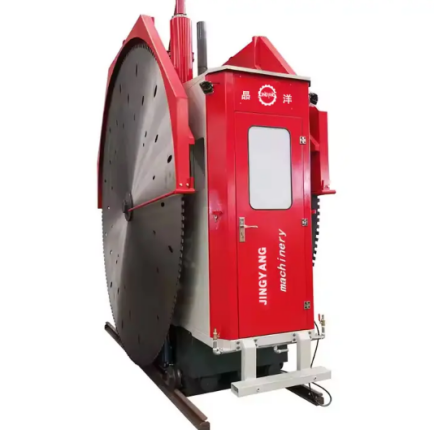
The term covers a wide range of machines. A quarry cutting machine works at the extraction site, slicing blocks from the bench. A bridge saw in a fabrication shop cuts slabs into countertop pieces. A multi-blade saw turns blocks into slabs. What ties them together is the expectation of continuous production, not occasional use.
That distinction matters because it changes how the machine is designed. Commercial machines carry heavier frames, stronger spindles, and more robust guide systems. They also cost more, which makes sense when the equipment is expected to pay for itself through production volume rather than sitting idle between small jobs.
Why Duty Cycle Is the Real Starting Point
Duty cycle is one of the most overlooked factors in stone machinery. A saw that runs two hours a day lives a different life than one that runs twelve. Heat builds up in the spindle, the guides wear, and the frame sees repeated loads. A machine designed for light use will start to show problems within months if it's pushed into commercial service.
Commercial machines are built around the idea that downtime is expensive. If a quarry saw stops, the entire extraction line stops. If a bridge saw goes down, fabrication jobs back up. That's why bearings, motors, and electrical components in commercial equipment are specified for continuous operation, not intermittent use.
A practical way to think about it is in hours per day. The table below shows how equipment expectations change as daily runtime increases.
Factor |
Light Duty Use |
Commercial Use |
Typical daily runtime |
Under 3 hours |
8 to 12 hours or more |
Frame design |
Moderate weight |
Heavy, vibration resistant |
Spindle rating |
Intermittent |
Continuous |
Guide protection |
Basic |
Sealed against dust and slurry |
Expected service life |
Years with light use |
Years under full production |
Structure and Weight Are Not Optional Extras
In stone cutting, weight is not a disadvantage. It's a form of stability. A heavy frame resists flex when the blade meets hard material. It absorbs vibration that would otherwise show up as chipping on the cut edge. It also keeps the guide rails from twisting under load.
This is especially true in quarry applications. A quarry cutting machine sits on uneven ground, often on rails that have been leveled by hand. Wind, dust, and temperature changes all work against accuracy. A machine with a light frame will wander. A machine with enough mass will hold its line.
The same principle applies in the fabrication shop. A bridge saw with a rigid beam and a well-supported table produces cleaner cuts and needs fewer adjustments over time. That's not a feature that shows up in a brochure photo, but it's the first thing an experienced operator notices after a week of cutting.
Controls Separate Modern Commercial Machines from Older Ones
Control systems have become a defining feature of commercial stone cutting equipment. Older machines relied on manual adjustments and operator experience. Modern machines use PLC controls, touchscreen interfaces, and stored cutting programs to keep parameters consistent.
That consistency is worth more than many buyers expect. When cutting depth, travel speed, and blade load are managed by the control system, the machine works inside a safer range. That reduces blade stress, lowers the chance of operator error, and helps produce the same result on the tenth cut as on the first.
Several Jingyang machines feature Siemens-based control technology. Quarry block cutters operate exclusively with Siemens PLC systems and have no CNC functions. A 7-inch touch-screen HMI is offered as an optional upgrade for quarry block cutters, purpose-built for on-site quarry dust and vibration to monitor cutting status and adjust working parameters. For bridge saws, configurations vary by model: standard versions use Siemens PLC, while high-end 5-axis CNC bridge-saw models adopt dedicated Italian ESA CNC systems fitted with a 19-inch touchscreen HMI that brings direct parameter setting into what used to be a rough manual environment. The operator can set cutting parameters directly, and the system holds them through the cut. This is a practical upgrade for operations that struggle with inconsistent operators or high turnover.
Why Build Quality Shows Up Under Continuous Load
A common pattern in fabrication shops is that a light bridge saw built for residential work will hold up fine on occasional jobs. But when the same saw is pushed into continuous commercial cutting, long straight cuts through hard quartzite, shift after shift, the guide rails start to show wear within days, and the cut edge develops a slight wave.
Shops that move this kind of work to a heavier machine with a stiffer beam and sealed linear guides consistently report the same result. The wave disappears, and cutting time per panel drops because the operator doesn't have to slow down to compensate for vibration. The change isn't about blade brand or motor power. It's about structural rigidity under continuous load.
That's the dividing line between equipment that can handle commercial duty and equipment that only works in lighter service. The weakness doesn't show up in the first hour. It shows up after the machine gets hot, stays hot, and keeps cutting.
Where Honest Limits Still Apply
Even the best commercial stone cutting machine has limits. Blade wear is unavoidable, especially in hard materials. Water management remains a daily task, whether in a quarry or a shop. And no control system can fully compensate for poor blade selection or a worn spindle.
Commercial equipment also demands more from the operator in terms of maintenance. Grease points need attention, guide rails need cleaning, and the water system needs regular checks. A machine that's easy to service will stay in production longer. One that's difficult to reach or requires special tools will cost more over time.
It's also worth saying clearly that a commercial machine is not automatically the right choice for every buyer. A small shop that cuts a few slabs a week may never recover the extra investment. The right equipment matches the production volume and the type of stone being cut.
Matching the Machine to the Workload Comes First
Defining a commercial stone cutting machine comes down to duty cycle, structure, controls, and serviceability. Those factors matter more than horsepower numbers or marketing claims. A machine that runs all day, holds its line, and stays easy to maintain will earn its place on the shop floor or quarry bench.
That's where an experienced manufacturer makes a difference. Jingyang's core team brings more than 30 years of experience in stone quarrying and processing equipment, with attention to frame rigidity, Siemens PLC integration, and field-level serviceability. A commercial machine bought with those priorities in mind becomes a production asset. One bought on price alone often becomes a bottleneck.
Table of Contents
- The Difference Between Commercial and Light Duty Equipment
- Why Duty Cycle Is the Real Starting Point
- Structure and Weight Are Not Optional Extras
- Controls Separate Modern Commercial Machines from Older Ones
- Why Build Quality Shows Up Under Continuous Load
- Where Honest Limits Still Apply
- Matching the Machine to the Workload Comes First