
 EN
EN


The Basic Job of a Quarry Saw Machine
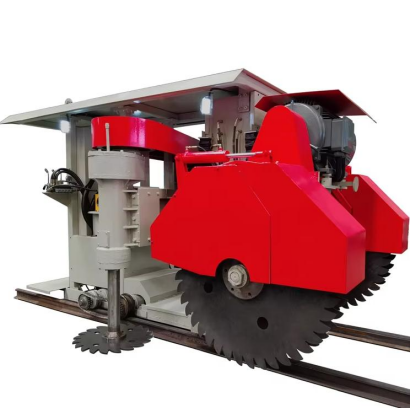
A quarry saw machine exists for one primary reason: cutting stone into blocks or slabs directly at the extraction site. Instead of hauling massive, irregular boulders to a distant processing plant, quarry operators cut the stone closer to where it comes out of the ground. That changes the economics of the whole operation.
The term can cover several machine types. Some quarry saws run on rails and use large circular blades. Others use wire saws. The common thread is that they all work in open quarries, often under harsh conditions, and they need to produce blocks with reasonably square faces and consistent dimensions.
A bridge saw, by contrast, usually refers to a shop floor machine used for cutting slabs into finished pieces. That distinction matters, because people sometimes confuse quarry saws with bridge saws. One works in the mine. The other works in the fabrication shop. Both cut stone, but they solve different problems.
Why Cutting at the Quarry Makes Economic Sense
Moving raw stone is expensive. A rough block can weigh several tons, and every kilometer of transport costs money. If the block is irregular, it also wastes space on a truck or ship. Cutting at the quarry reduces the weight and volume that needs to be moved, and it leaves waste material behind where it can be handled locally.
There's another benefit. Stone quality becomes visible earlier. When a quarry saw cuts a block face, the operator can see cracks, color changes, or mineral inclusions right away. That information helps decide whether a block goes to a high-value slab line or gets marked for lower-grade use. Without that early cut, problems stay hidden until the block reaches the processing plant, sometimes thousands of kilometers away.
The table below compares typical outcomes when cutting happens at the quarry versus at a distant processing facility.
Factor |
Cutting at the Quarry |
Cutting at a Distant Plant |
Transport weight |
Lower after trimming |
Higher, includes waste |
Quality inspection |
Earlier, on site |
Later, after shipping |
Waste handling |
Stays near quarry |
Requires plant disposal |
Equipment exposure |
Dust, weather, rough terrain |
Controlled shop conditions |
Capital location |
Spreads cost to extraction site |
Concentrated at plant |
Where Circular Quarry Saws Fit In
Circular quarry saws are one of the more common machines in stone extraction. They mount a large diameter blade on a traveling carriage that runs along rails. The blade makes vertical cuts, and sometimes horizontal cuts, depending on the machine design. These saws work well in quarries where the stone has relatively uniform structure and the benches are accessible.
The advantage of a circular saw is speed. A large blade can make a clean vertical face quickly, and the cut surface is smooth enough to reduce later processing. The limitation is depth. A circular blade can only cut as deep as its radius allows, minus the arbor and carriage clearance. That means circular quarry saws work best for bench heights that match the blade capacity.
Water is essential. The blade needs continuous cooling, and the water also controls dust. In a quarry, managing that water is a real challenge. Runoff picks up stone fines and needs to be settled before it leaves the site. Quarry operators who ignore water management quickly create environmental problems downstream.
Why Machine Rigidity Matters More in a Quarry
A quarry is a rough place for machinery. Machines sit on uneven ground, face wind and dust, and get moved from one bench to another. Under those conditions, a light frame will flex, and the blade will wander. A cut that drifts by a few millimeters may not matter on a rough block, but on a saw kerf that runs several meters, small errors add up.
That's why quarry saw frames tend to be heavy. The rails need to be aligned carefully, and the carriage has to stay square to the rail. If the rail shifts, the blade binds. If the frame twists, the cut face comes out curved. Those problems are hard to fix in the middle of a quarry bench.
Control technology also plays a bigger role than many quarry operators expect. Several Jingyang quarry machines run on robust Siemens-based PLC control. A 7-inch touch-screen HMI is offered as an optional upgrade for operators to monitor cutting status and adjust working parameters on-site. This compact HMI is purpose-built for quarry dust and vibration. That's a practical shift. Instead of guessing feed pressure or relying on feel, the operator can set cutting depth, travel speed, and blade load through the control panel. The system keeps the machine working inside a safer range, which reduces blade stress and helps keep cuts straighter over long passes.
A Real Quarry Example Shows the Difference
A quarry crew in southeastern China was cutting medium-density granite on a bench about three meters high. The first cuts used a lightweight rail saw, and the blade drifted noticeably after about six meters of travel. The cut face had a visible curve, and the block needed extra trimming at the plant.
The crew switched to a heavier machine with a stiffer frame, better rail clamping, and Siemens PLC-based control. The same blade size produced a straighter face, and the trimming waste dropped. The quarry also spent less time reworking blocks before shipping. The change wasn't about blade speed. It was about holding position under load and letting the control system manage the cutting parameters instead of relying on manual feel.
That example reflects a common pattern. Quarry saw performance depends on structure first, blade condition second, and control consistency third. A well-built machine with a reliable PLC gives the operator a fair chance. A light machine fights the operator all day.
Limitations Worth Knowing Before Buying
Quarry saw machines aren't universal tools. They work best in quarries with accessible benches, uniform stone, and enough water supply. In highly fractured stone, a circular saw may struggle because loose sections shift during cutting. In extremely hard stone, blade wear rises quickly, and production slows.
Wire saws often take over where circular saws reach their limits. They can cut deeper benches, handle irregular blocks, and work in tighter spaces. But they also bring different costs and slower setup. The right choice depends on the quarry, not on a brochure.
Maintenance is another honest point. Quarry saws work in abrasive conditions. Bearings, rails, and blade flanges need regular inspection. A machine that's easy to service in the field saves real money. One that requires special tools or long spare part lead times will sit idle while the quarry waits.
Matching the Machine to the Quarry Comes First
A quarry saw machine is a long-term investment, and the purchase decision should start with the stone, the bench layout, and the production plan. Blade size, rail length, frame weight, and water handling all follow from those basics. Buying a machine because it looks similar to another quarry's setup often leads to mismatched equipment.
That's where working with an experienced manufacturer helps. Jingyang has built stone quarrying and processing equipment for years, and that background shows in how machines are designed for real site conditions. Frame stiffness, rail alignment, Siemens PLC integration, and field serviceability get attention from the start. A quarry saw bought with those priorities in mind becomes a dependable part of the extraction process, not another machine parked in the corner waiting for the right conditions.