EN



Selecting a commercial stone cutting machine requires balancing current production bottlenecks against future growth. This practical buying guide delivers actionable tips for growing shops to choose the right stone cutting machine, upgrade workshop throughput, minimize expensive material waste on quartz and sintered stone, and transition smoothly into automated CNC fabrication without overextending capital reserves.
Tip 1: Match Equipment Kinematics to Real Workshop Order Mix
Growing fabrication facilities often make the mistake of buying equipment based on speculative project possibilities rather than real, billed jobs. Before comparing technical specifications, audit your past twelve months of finished invoices. Break down your production volume into simple dimensional slab sizing, straight kitchen countertops, sink cutout processing, and 45-degree mitered drop edges.
If eighty percent of your revenue comes from residential quartz surfaces, investing in a basic manual rail saw or an entry-level bridge cutter will choke production at the hand-finishing station. Conversely, leaping directly into dedicated, complex single-purpose machinery can tie up operating cash while leaving the machine sitting idle between specialty orders.
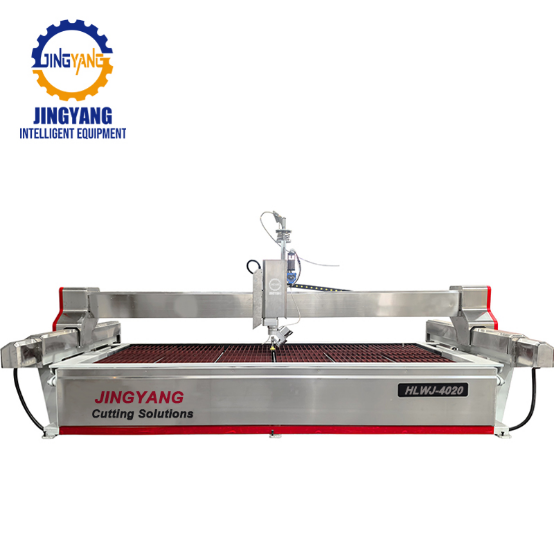
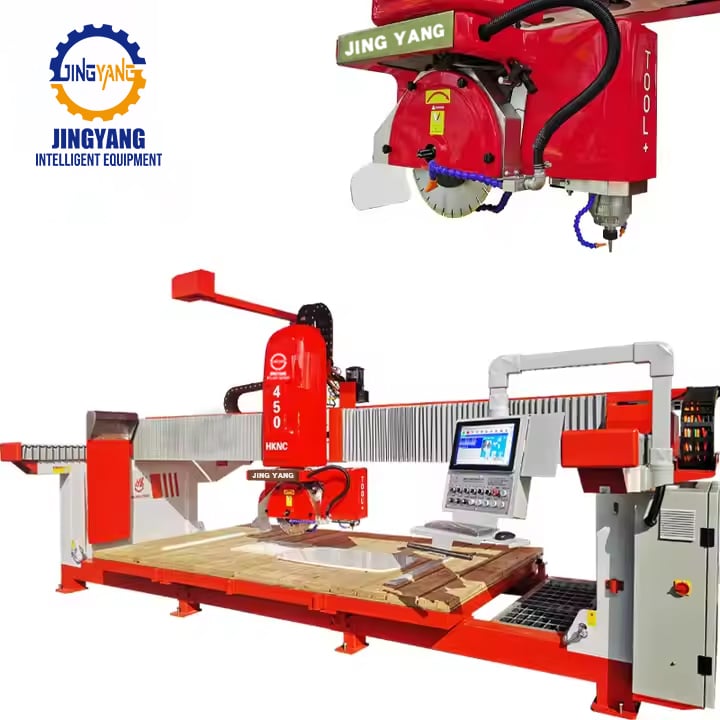
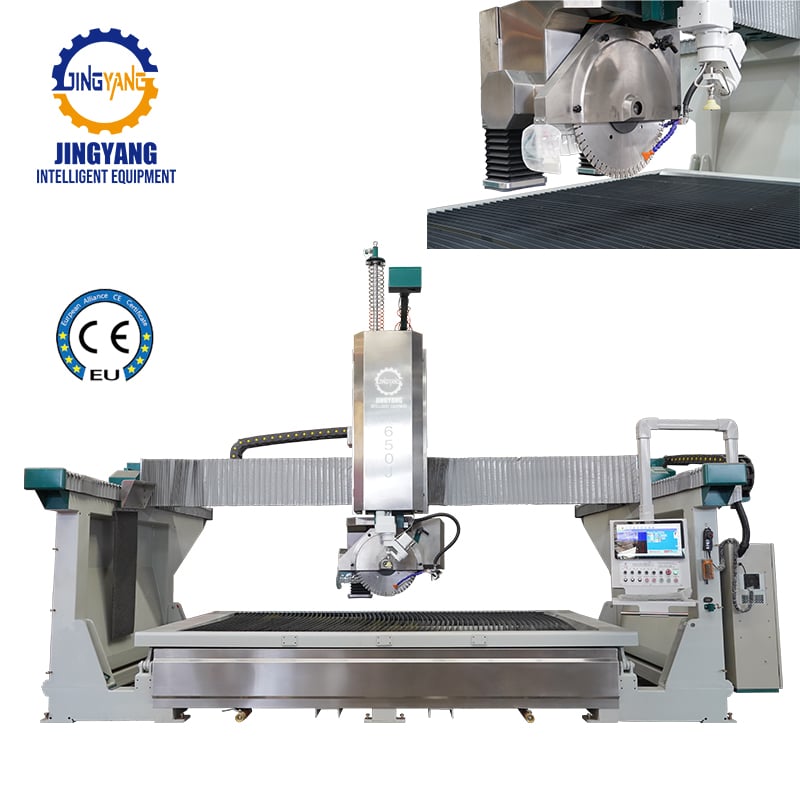
An expanding business requires balanced, versatile stone fabrication equipment. For standard kitchen and bath production, a modern 4-axis or 5-axis CNC setup handles straight slicing, complex angled mitering, and curved perimeter profiling within a single loading cycle. By matching the mechanical axis capability to your true order mix, your shop expands its daily square-meter output while avoiding payment burdens on unneeded features.
Tip 2: Prioritize Multi-Functional Processing to Maximize Floor Space
Floor space is precious in an expanding workshop. Bringing in separate machines for primary saw cutting, manual sink drilling, and edge profiling quickly clogs travel aisles, limits raw slab storage, and multiplies hazardous overhead crane movements. Every time an operator lifts an unfinished, fragile slab between different cutting stations, the risk of micro-fracturing or catastrophic dropped stone spikes dramatically.
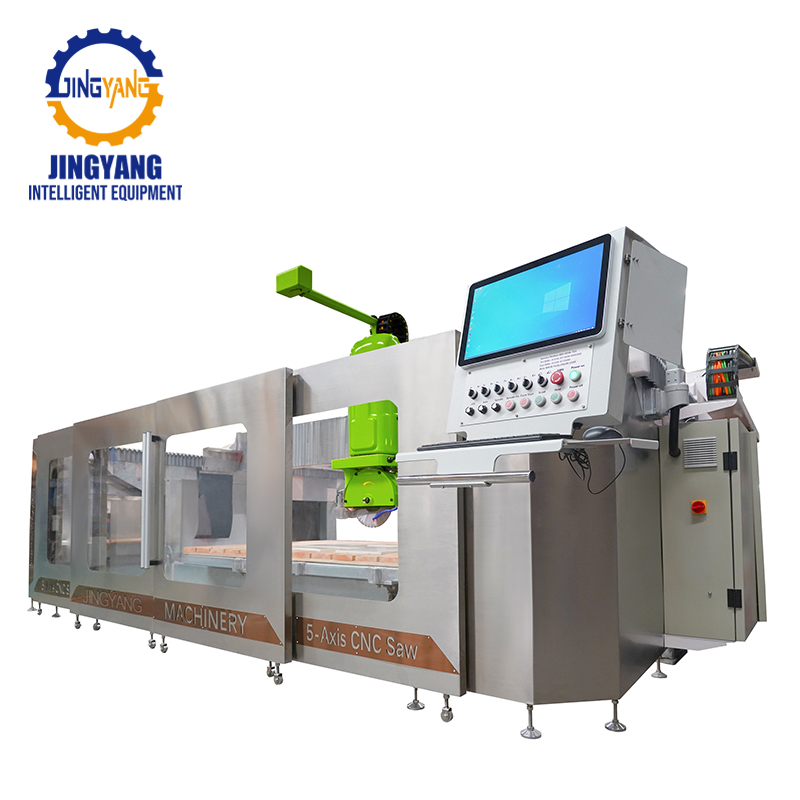
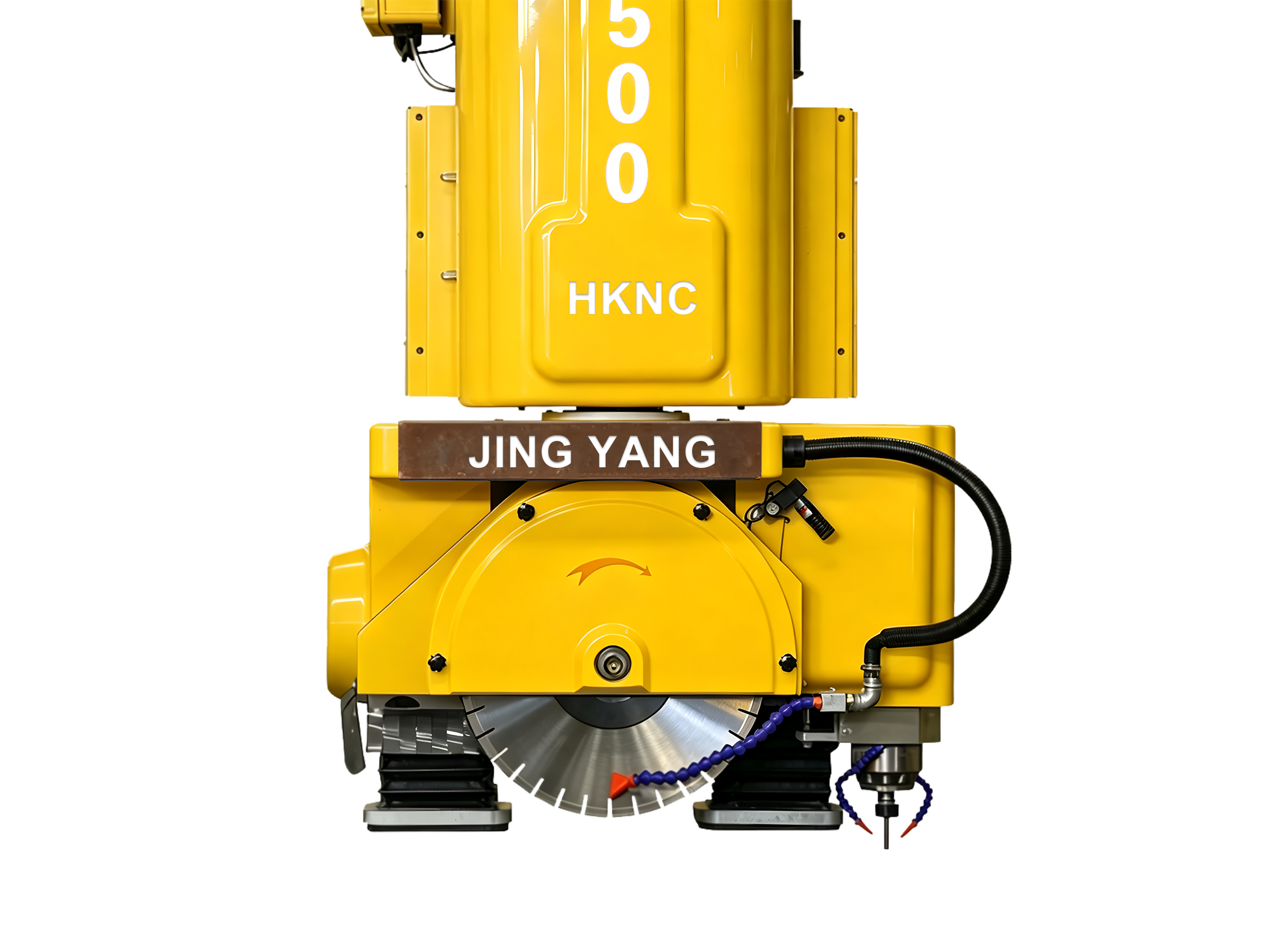
Modern commercial stone cutting equipment integrates complementary operations into an integrated workstation. Multi-functional cutting bridges frequently pair a diamond circular blade with secondary tooling systems:
- High-speed digital routing spindles: Mounted parallel to the primary saw arbor to mill out undermount sink openings and drill faucet holes without manual template routing.
- Overhead digital slab-imaging cameras: Positioned directly above the hydraulic tilting table to capture real-time slab dimensions and surface veining patterns.
- Vacuum manipulator lifters: Integrated into the moving cutting carriage to automatically shift cut blanks away from the kerf, preventing blade collisions during blind orthogonal cuts.
- Variable-angle miter head kinematics: Capable of sweeping continuously from 0 to 90 degrees to execute crisp waterfall edges and drop-front miter joints without manual work holding.
Consolidating these secondary tasks onto a single multi-functional stone cutting machine maximizes revenue output per square meter of leased building space.
Tip 3: Evaluate Machine Rigidity and Spindle Dynamics for Hard Materials
The modern countertop market has shifted rapidly from soft, forgiving natural marbles toward high-hardness granites, dense engineered quartz, and ultra-compact sintered porcelain panels. These advanced architectural surfaces carry high internal material stresses and zero tolerance for mechanical chatter.
If a commercial stone cutting machine lacks structural frame mass, cutting resistance turns into micro-vibrations across the cutting arbor. When slicing high-tensile sintered porcelain, the slightest vibration causes explosive blade binding, chipped surface glazes, or cracked workpieces. A ruined premium jumbo slab instantly wipes out the profit margin of an entire residential kitchen job.
Construction Parameter |
Entry-Tier Light Fabrication Frame |
Industrial Heavy-Duty Fabrication Frame |
Gantry Beam Construction |
Thin-wall hollow structural steel tube |
Heavy-wall box steel beam, thermally stress-relieved |
Machine Side Supports |
Bolted sheet steel or lightweight masonry legs |
Solid one-piece cast iron pillars or reinforced steel uprights |
Main Motor Drive |
11 kW to 15 kW standard AC motor |
15 kW to 22 kW+ inverter-duty permanent magnet motor |
Spindle RPM Control |
Fixed rotational speed or basic stepped pully |
Variable Frequency Drive (VFD), 0 to 6,000+ RPM variable |
Axis Motion Guidance |
Light-duty external track rollers |
Sealed, self-lubricating precision linear guide ways |
Inspect the main spindle motor characteristics. Sintered porcelain and hard quartzites demand precise diamond peripheral speeds. A premium machine incorporates an inverter-driven spindle motor paired with an encoder to maintain steady torque across low and high RPM ranges. This dynamic control lets operators spin large diamond discs for primary granite slicing, then instantly spin up small-diameter core drills and finger bits to rout tight-radius sink corners cleanly.
Tip 4: Audit the Software Interface and Operator Learning Curve
The most advanced mechanical hardware is useless if your shop operators cannot program it smoothly. Mid-sized shops often face high staff turnover and a severe shortage of experienced stone masons. Your equipment investment must decouple daily shop output from rare manual craftsmanship.
When evaluating a stone slab cutting machine, demand a complete demonstration of the integrated CAD/CAM software interface:
- Parametric shop templates: Verify whether the system features pre-loaded, parametric kitchen layouts where an operator simply types in finished countertop lengths, depths, and seam positions to auto-generate toolpaths.
- DXF file ingestion: Ensure the control software accepts clean vector DXF files exported directly from industry-standard digital laser measuring systems.
- Automated vein-matching tools: Check if the camera software lets operators digitally superimpose virtual countertop cut pieces over natural marble veins to show customers finished seams before making the first cut.
- Collision detection safety algorithms: Confirm the onboard controller features automated simulation algorithms that flag rapid-traverse moves through uncut stone or clamping obstructions.
A simple, user-friendly interface allows a basic machine operator to run complex production runs within days, eliminating weeks of software training downtime.
Tip 5: Choose an Established Manufacturer with Complete Systems Experience
Expanding stone businesses cannot afford to treat machinery suppliers like anonymous online storefronts. Buying your first major automated production machine represents a long-term operational partnership. Suppliers that only rebrand generic, outsourced light equipment rarely provide the engineering depth, parts availability, or structural durability required for multi-shift commercial work.
Drawing on decades of dedicated research and stone machinery manufacturing experience, Jingyang Machinery builds industrial equipment with heavy-duty structural foundations, reliable hydraulic controls, and stable drive trains. Because Jingyang manufactures comprehensive equipment lines—from massive quarry extraction machinery to advanced bridge saws, sawjets, and polishing stations—its engineering teams understand the punishing physical realities of daily stone processing.
When vetting potential machinery builders, check their parts supply chain. Ensure standard consumable components—like linear guide blocks, pneumatic solenoid valves, proximity sensors, and water cooling manifolds—use globally accessible industrial metric standards. If a proprietary electrical control board fails during your peak seasonal rush, waiting weeks for a custom replacement from overseas can ruin your delivery schedules and commercial reputation.
Tip 6: Calculate Total Operational ROI Over Headline Purchase Price
A cut-rate purchase price often blinds shop owners to punishing downstream ownership costs. Saving ten thousand dollars on an initial equipment quote is meaningless if that machine burns through costly diamond segments, requires constant manual shimming, or keeps an expensive technician on call.
True return on investment balances equipment financing against labor reduction, material optimization, and reclaimed outsourcing costs. Calculating real return on investment requires answering clear operating questions:
- How many hours of hand-grinding and manual sink cutout labor will this machine eliminate each week?
- How many square meters of raw slab yield will digital nesting tools save compared to manual chalk-line positioning?
- Can your shop bring profitable mitered edges and porcelain cutting in-house rather than subcontracting to outside processing facilities?
- Does the equipment manufacturer provide comprehensive remote diagnostics through Ethernet connections to resolve control glitches instantly?
A dependable commercial stone cutting machine should pay for its monthly capital lease through direct labor savings and lower material scrap rates alone, providing the baseline your shop needs to scale smoothly.
A Few Final Words
Upgrading your workshop with a modern commercial stone cutting machine transforms an over-stressed fabrication shop into a profitable, high-throughput manufacturing facility. Invest in a stone cutting machine engineered with the structural rigidity, multi-axis agility, and intuitive software controls needed to conquer demanding quartz, granite, and sintered stone surfaces.
Contact Jingyang Machinery today to review your production volume, available workshop footprint, and primary slab materials. Our machinery specialists will deliver a complete technical breakdown and recommend the ideal cutting configuration to accelerate your business growth.