EN


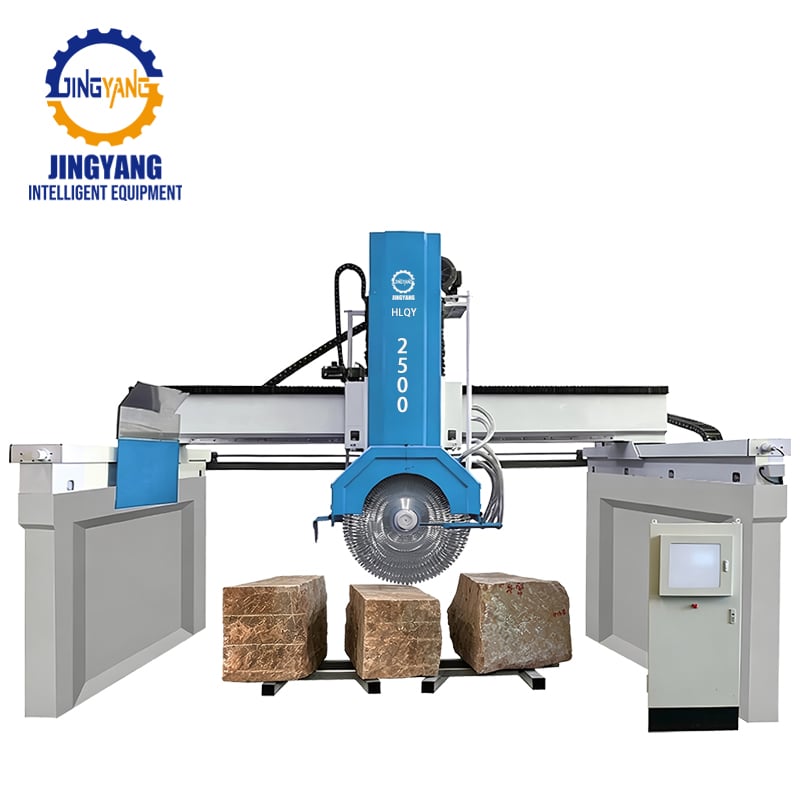
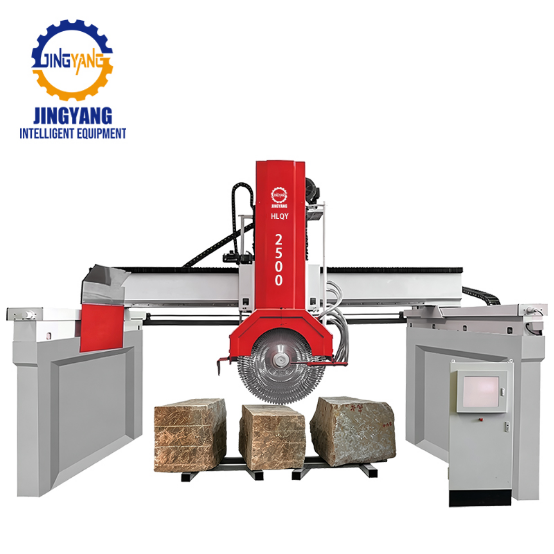
Buying a block cutter machine for massive stone requires verifying real mechanical limits, structural rigidity, cut clearance, and deep-slurry cooling before signing a contract. This buying checklist guides stone processors through evaluating a heavy-duty block cutter machine, auditing structural steel and guide systems, calculating true operational capacity, and avoiding catastrophic slab losses when processing oversized granite and marble blocks.
Verify True Usable Envelope Beyond Theoretical Numbers
Catalog brochures frequently highlight theoretical dimensions measured under empty, zero-load conditions using minimal blade sizes. When processing real-world quarry blocks weighing 15 to 30 tons, usable operational clearances decrease significantly.
A heavy block rarely arrives with square, neat faces. Irregular protrusions, uneven bases, and rough tapers steal critical headroom. Buyers must measure the true clearance beneath the main spindle flange rather than the bare crossbeam height. The real usable stroke equals total blade radius minus the drive flange diameter, minus safe mechanical margins above the trolley platform.
Usable Vertical Depth = Blade Radius - Flange Radius - Safety Margin
Examine the effective rail travel length. A multi-blade setup requires extra approach travel before the leading blade contacts the stone face, along with over-travel past the trailing edge so the trailing blade exits cleanly. If the trolley stroke or gantry rail lacks these over-run lengths, the stone block cutter machine cannot finish the cut without repositioning the stone manually. Always calculate real clearances using your thickest, highest, and most irregular natural block specifications.
Machine Mass, Structural Rigidity, and Vibration Damping
Processing dense blocks generates severe mechanical resistance. If an industrial stone block cutting machine lacks structural mass, that resistance turns into frame flexing, guide rail deflection, and resonant vibration. The result is uneven slabs with wavy patterns, variable thickness tolerances across the length, and accelerated segment loss.
Cutting Vibrations → Blade Deflection → Thickness Variance (Wavy Slabs) → Polishing Grinder Rework
Cast iron components provide natural vibration-damping properties superior to lightweight hollow structural sections. For large welded steel gantries, verify whether the manufacturer performs stress-relief heat treatment after welding. Structural frames built without thermal annealing warp slowly over months of operation under heavy loads, causing alignment drift across the main linear rails.
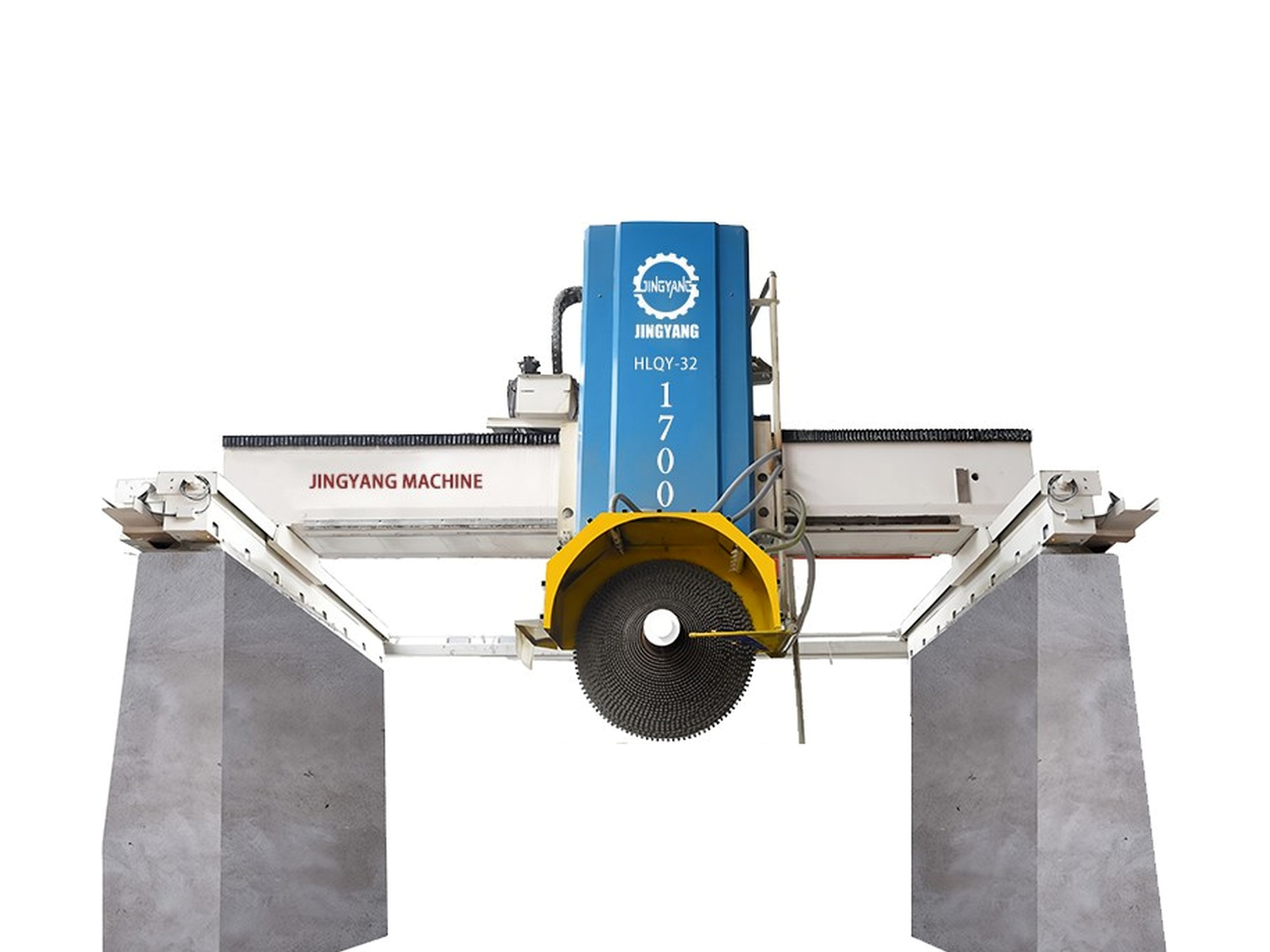
Examine the guide mechanism controlling vertical downfeed. Heavy-duty processing generally relies on hydraulic four-pillar guide systems enclosed within sealed oil baths, or hardened oversized box ways with centralized lubrication. The column diameters must resist twisting forces when multi-blade packs bite into dense, fine-grained granites. Inspect the trolley bed construction as well; steel transport beds must carry concentrated 25-ton point loads without frame deflection that alters the horizontal cutting plane.
Main Spindle Drive, Motor Power, and Step-Down Control
Tearing through deep stone blocks requires sustained motor torque, high-efficiency mechanical gearboxes, and precise electronic feed controls. An underpowered drive unit forces operators to slow step-down feed rates to a crawl, turning an expensive high-capacity granite block cutter machine into an operational bottleneck.
Engineering Parameter |
Standard Processing Setup |
Heavy-Duty Large Block Setup |
Main Motor Power |
37 kW – 45 kW |
55 kW – 75 kW+ |
Vertical Guide System |
Dual linear guides / twin pillars |
4-pillar hydraulic with sealed oil-bath sleeves |
Max Practical Blade Range |
1,200 mm – 2,200 mm |
2,500 mm – 3,000 mm+ (or combined multi-blade) |
Block Transport Trolley |
10 – 15 Metric Tons |
20 – 35 Metric Tons (motorized with mechanical locking) |
Feed Drive Modulation |
Single-speed AC drive |
Variable Frequency Drive (VFD) with torque sensing |
Cooling Delivery |
External spray manifolds |
Multi-point internal deep-kerf high-pressure injection |
Feed rate flexibility matters as much as raw drive power. Natural quartz-rich stones contain dense mineral pockets and directional grain structures that alter resistance along the cut line. Modern cutting equipment incorporates inverter-driven feed motors that adjust traverse speeds according to real-time spindle load amperage. If the main motor encounters dense mineral inclusions, the control software reduces the carriage advance speed automatically, preventing blade slippage, motor stall, and segment glazing.
Deep-Kerf High-Pressure Cooling and Slurry Extraction
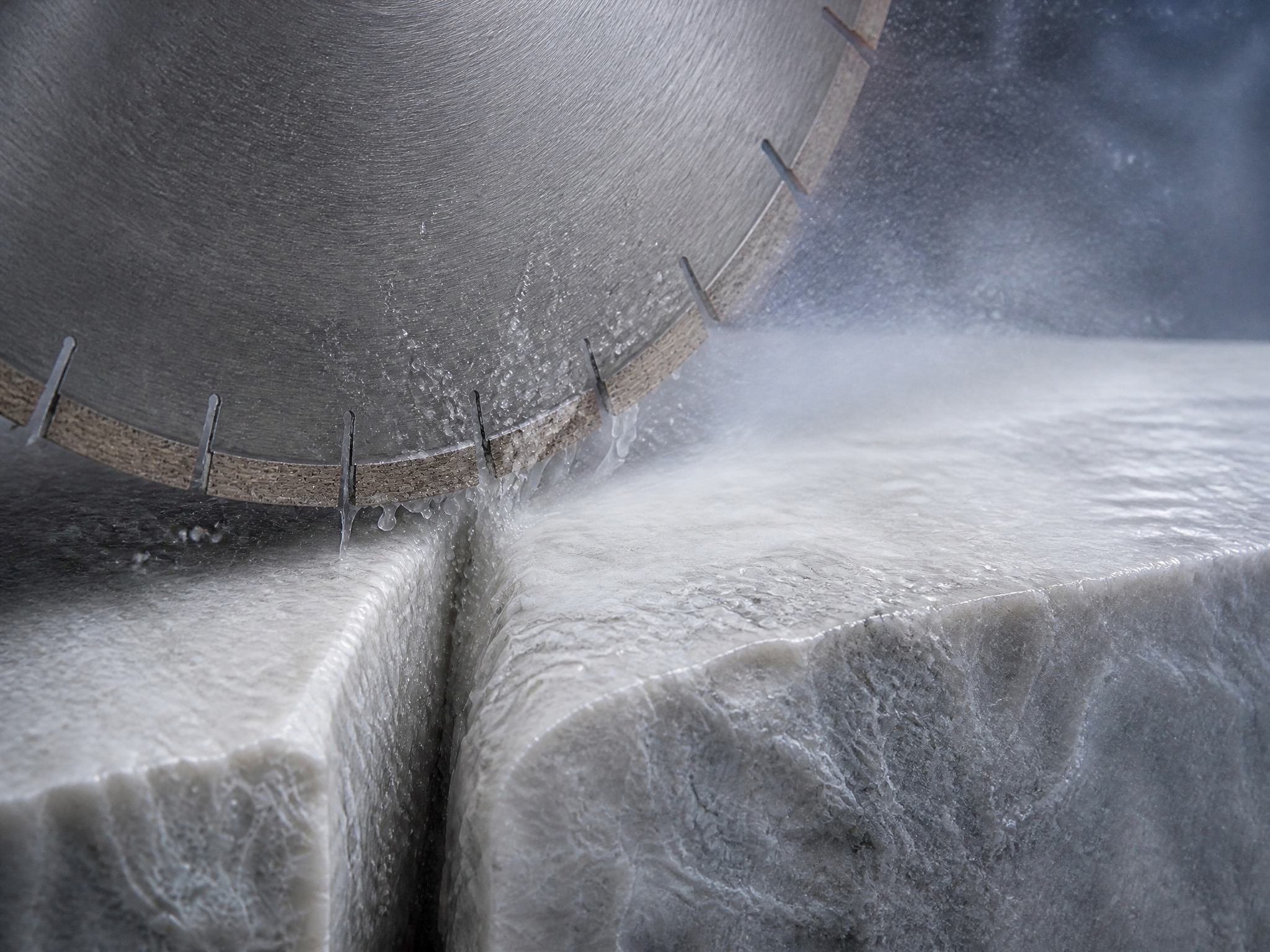
Cutting deep blocks creates narrow, enclosed kerfs measuring 1.5 to 2.5 meters down from the stone face. Conventional overhead external water pipes cannot shoot coolant down into this high-pressure friction zone. Water streams hit the high-speed blade surface, vaporize, and throw a fine mist outwards, leaving the active cutting segments dry.
- Targeted high-pressure water delivery: The cooling system must feature internal delivery nozzles positioned to inject coolant straight down the blade core into the cut path.
- Flushing fine abrasive powder: Water cools the diamond matrix while flushing slurry out of the kerf. Trapped sludge acts as an abrasive paste that grinds down structural blade cores prematurely.
- Corrosion-resistant manifold design: Heavy slurry quickly clogs small orifices, so look for clean-out ports, non-corrosive stainless piping, and integrated water-pressure interlocks.
- Automatic safety shut-off: If water supply pressure drops below a safe operational threshold, the control system must retract the blades immediately to prevent overheated, warped blade blanks.
Blade Configuration Flexibility: Single Versus Multi-Blade
Your production schedule determines whether a dedicated single-blade marble block cutting machine or a multi-blade gang-style block cutting machine provides a faster return on investment. Single large-diameter circular blades (2,500 mm to 3,000 mm+) cut full-depth architectural pieces, thick stair components, and massive counter slabs. Multi-blade setups carry stepped diamond discs (from small diameter up to mid-size) to slice multiple standardized construction slabs simultaneously.
A multi-blade stone block cutter machine requires higher structural horsepower and wider gantry spans to clear rotating disk packs without frame contact. However, running multi-blade packs increases lateral thrust loads against vertical support columns. Confirm that the machine spindle carries premium oversized bearings matched to axial and radial thrust loads. If your business shifts between custom monuments and high-volume flooring slabs, verify how long the arbor requires to swap single large-diameter discs for multi-blade configurations.
Foundation Engineering, Site Layout, and Plant Infrastructure
Oversized block processing machinery cannot sit on standard industrial concrete pads. A loaded heavy-duty block cutter machine carrying a 25-ton stone block creates significant dynamic forces during rapid carriage reversals. These moving masses transfer shock directly into the subsoil.
- Dedicated foundation engineering: Review the manufacturer's foundation drawings before ordering. These structural footings generally demand deep-pour reinforced concrete pilings tied into solid bedrock or stabilized sub-base pads isolated from standard building floor slabs.
- Integrated slurry collection trenches: Deep foundations must incorporate steep sloped drainage trenches beneath the trolley station to direct heavy stone sludge directly toward external settlement tanks.
- Overhead crane access corridors: Ensure overhead bridge cranes clear the peak height of the main columns when the vertical carriage is fully raised.
- Isolated electrical grounding: Heavy inverter motors create harmonic feedback; wire machine cabinets to independent grounding rods to protect sensitive PLC logic boards from voltage spikes.
Evaluating Engineering Pedigree and Service Infrastructure
Heavy-duty stone machinery involves physical mechanics under punishing, wet, abrasive environments. Equipment designed by fabricators who lack deep quarrying knowledge often reveals undersized bearings, fragile seals, and light sheet metal. Manufacturers with direct roots in primary extraction understand the physical stresses involved when heavy tools bite unyielding rock faces.
Drawing on decades of manufacturing and quarrying equipment experience, Jingyang Machinery designs its heavy-duty block cutter machine systems with reinforced castings, robust hydraulic columns, and stable drive trains. The company's equipment reflects practical quarry-tested engineering, ensuring machines absorb heavy vibrations reliably over years of continuous production shifts.
When evaluating suppliers, inspect real factory component choices. Look past paint quality to examine brand names on linear tracks, hydraulic valves, and electrical control cabinets. Confirm that replacement parts use standardized metric industrial dimensions rather than proprietary captive components that require weeks of international transit during an unexpected breakdown.
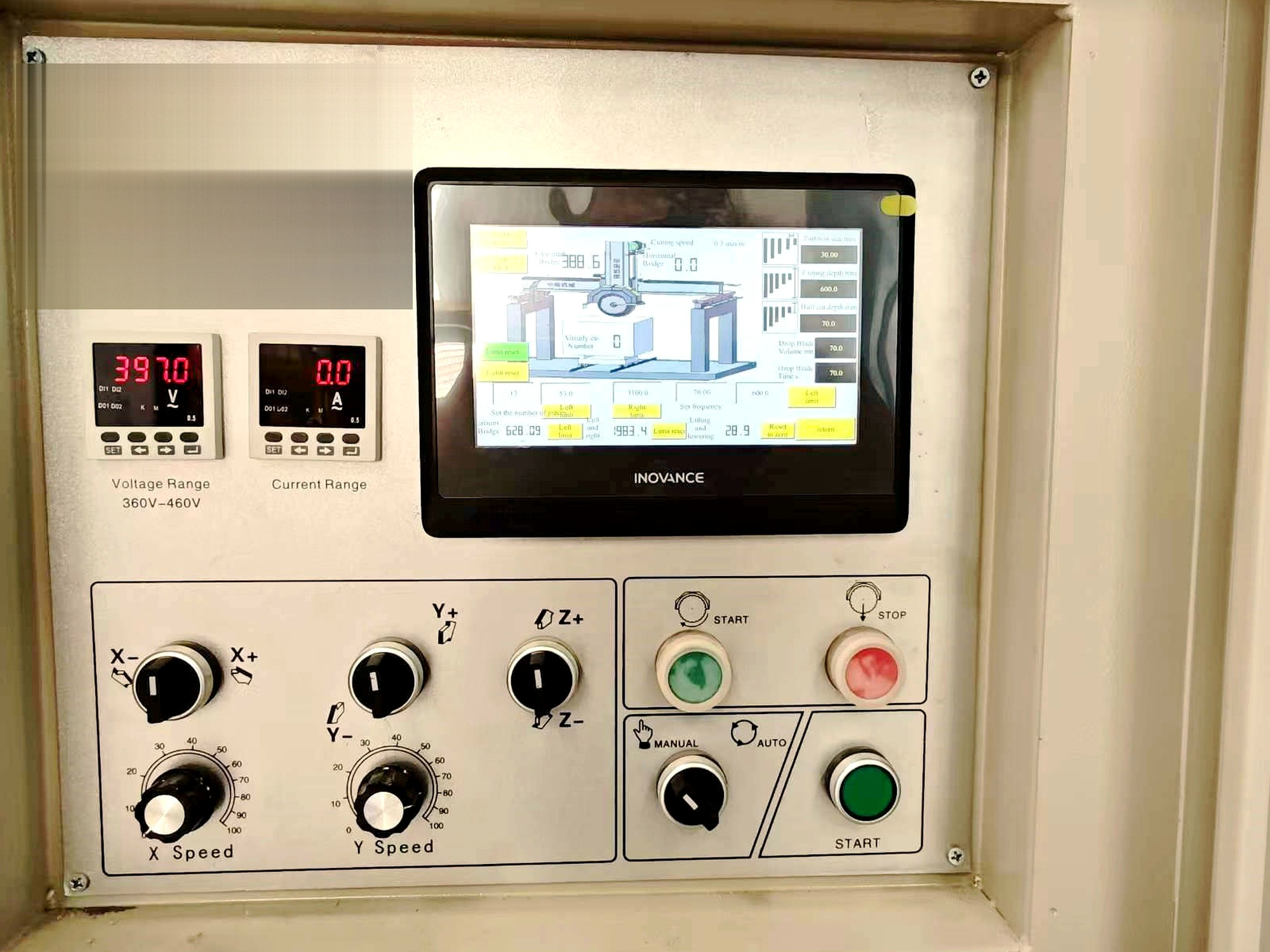
Pre-Delivery Inspection and Heavy-Load Acceptance Testing
Never accept delivery of an industrial stone block cutting machine based solely on unloaded dry-cycling videos. A machine cycling its bridge smoothly through empty air reveals nothing about structural rigidity under load.
Before final sign-off, require practical wet cutting trials using dense, hard materials similar to your daily production stock. Have the machine slice a full-height stone block down to maximum operational depth. Once the cut is complete, inspect the finished slab face with precision straightedges. Check for:
- Visible step marks across vertical plunge transitions.
- Thickness discrepancies between the top edge and bottom base of the slab.
- End-to-end parallel deviation along the traverse axis.
- Motor temperature spikes and structural carriage vibration using hand-held sensors.
Accurate test cuts prove structural rigidity, spindle alignment, and carriage tracking before equipment leaves the factory floor.
In the End
Choosing the right block cutter machine protects your bottom line against cracked slabs, tool failures, and expensive downtime. Invest in a heavy-duty block cutter machine engineered to handle real-world stone masses, deep-kerf cooling demands, and continuous shift operations.
Contact Jingyang Machinery today to discuss your block dimensions, stone varieties, and daily slab capacity requirements. Our technical team will supply complete mechanical specifications, foundation layout schematics, and production-matched equipment recommendations tailored to your stone processing facility.