EN



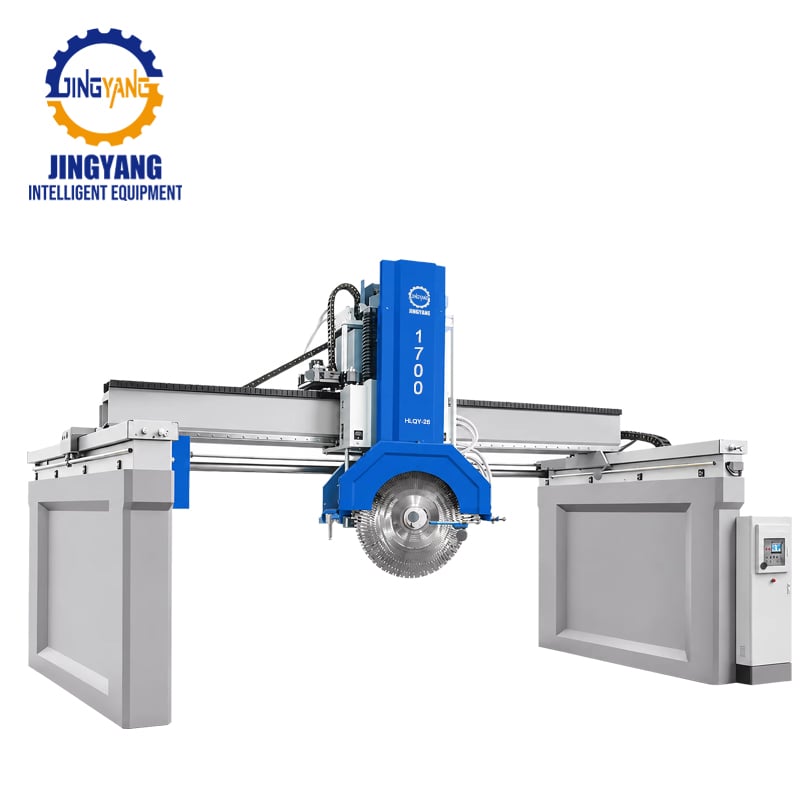
Choosing an industrial stone cutting machine over standard cutting equipment is a high-stakes operational decision for high-volume factories. This comparative engineering guide examines why light-duty machines fail under multi-shift workloads, how a heavy-duty stone cutting machine eliminates thermal drift and spindle chatter, and which equipment architecture delivers lower production costs per square meter when processing dense granite, engineered quartz, and massive natural marble slabs.
The Continuous Duty Divide: Multi-Shift Production Reality
Standard fabrication machinery is engineered around single-shift production schedules running six to eight hours daily with built-in cool-down periods. When a growing plant attempts to run these commercial units across double or triple shifts to meet high-volume delivery deadlines, structural fatigue sets in quickly.
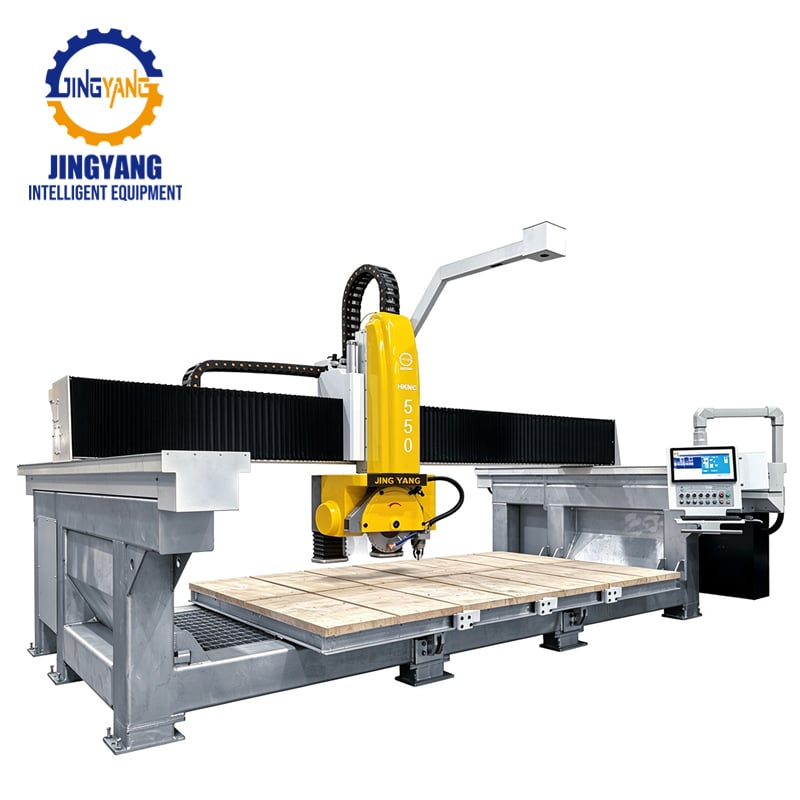
An industrial stone cutting machine is designed from the ground up for continuous 24/7 duty cycles. Under round-the-clock conditions, machines endure unrelenting mechanical stresses, friction-generated heat, and aggressive slurry exposure. Light-duty gantries fabricated from thin sheet steel or unannealed hollow structural tubes begin to flex under continuous load cycles. Over months of non-stop operation, internal welding stresses release, causing the main gantry bridge to sag or bow permanently.
Once beam geometry distorts even a fraction of a millimeter, cutting accuracy collapses. Slabs sliced in the morning no longer match the squareness of slabs processed late at night. Conversely, an industrial granite cutting machine incorporates thick-walled box-section bridges or dense gray iron castings that undergo extensive thermal stress-relief annealing. This mechanical mass absorbs continuous dynamic forces, ensuring critical cutting alignments remain true across years of uninterrupted production.
Thermal Drift, Structural Rigidity, and Dimensional Repeatability
In high-volume architectural processing, dimensional consistency is directly tied to profit margins. Large-scale commercial cladding and high-density flooring projects cannot tolerate kerf taper, angular deviation, or thickness variance. This is where structural rigidity and thermal management separate standard machines from heavy-duty equipment.
Engineering Parameter |
Standard Stone Cutting Equipment |
Heavy-Duty Industrial Machine |
Gantry Construction |
Welded thin-wall steel hollow tube |
Annealed heavy-plate box beam or cast iron |
Main Drive Power |
11 kW to 15 kW standard electric motor |
22 kW to 45 kW+ high-torque inverter motor |
Linear Motion Bearings |
Light-duty recirculating ball bearings |
Heavy-duty preloaded cylindrical roller guides |
Thermal Stabilization |
Ambient air cooling; unmonitored oils |
Forced-liquid spindle cooling & chilled hydraulics |
Axis Feedback Loops |
Open-loop steppers or incremental encoders |
High-resolution sealed absolute linear optical scales |
Continuous Duty Rating |
Intermittent duty (6–8 hours/day) |
True 24/7 continuous industrial duty cycle |
During sustained cutting cycles on hard granite or dense quartzite, drive motors and hydraulic gearboxes generate substantial heat. In standard machinery, this localized heat radiates into the machine chassis, expanding the metal non-uniformly. The result is thermal axis drift: the blade tracks slightly off-axis as the shift progresses, turning clean 90-degree cuts into out-of-square panels that fail quality control inspections.
An industrial CNC stone cutting machine mitigates thermal expansion through forced closed-loop liquid cooling across the main arbor bearings and electrical enclosures. Paired with high-resolution absolute encoders that read axis positions directly from the physical machine bed rather than rotary motor steps, the industrial unit maintains sub-millimeter positional repeatability from the first slab cut at dawn to the final cut of the graveyard shift.
Spindle Dynamics, Cutting Torque, and Diamond Tooling ROI
High-volume factories live and die by linear cutting speed and consumable costs. Underpowered standard cutting equipment bottlenecks the plant floor, forcing operators to execute multiple shallow step-down passes to slice through 30 mm granite or engineered stone slabs.
Standard machines typically feature light 11 kW to 15 kW motors. These power plants lack the continuous low-end torque required to push large-diameter diamond circular blades deep into dense stone matrices. Forcing an underpowered spindle causes motor bog-down, rotational speed drops, and rapid segment glazing.
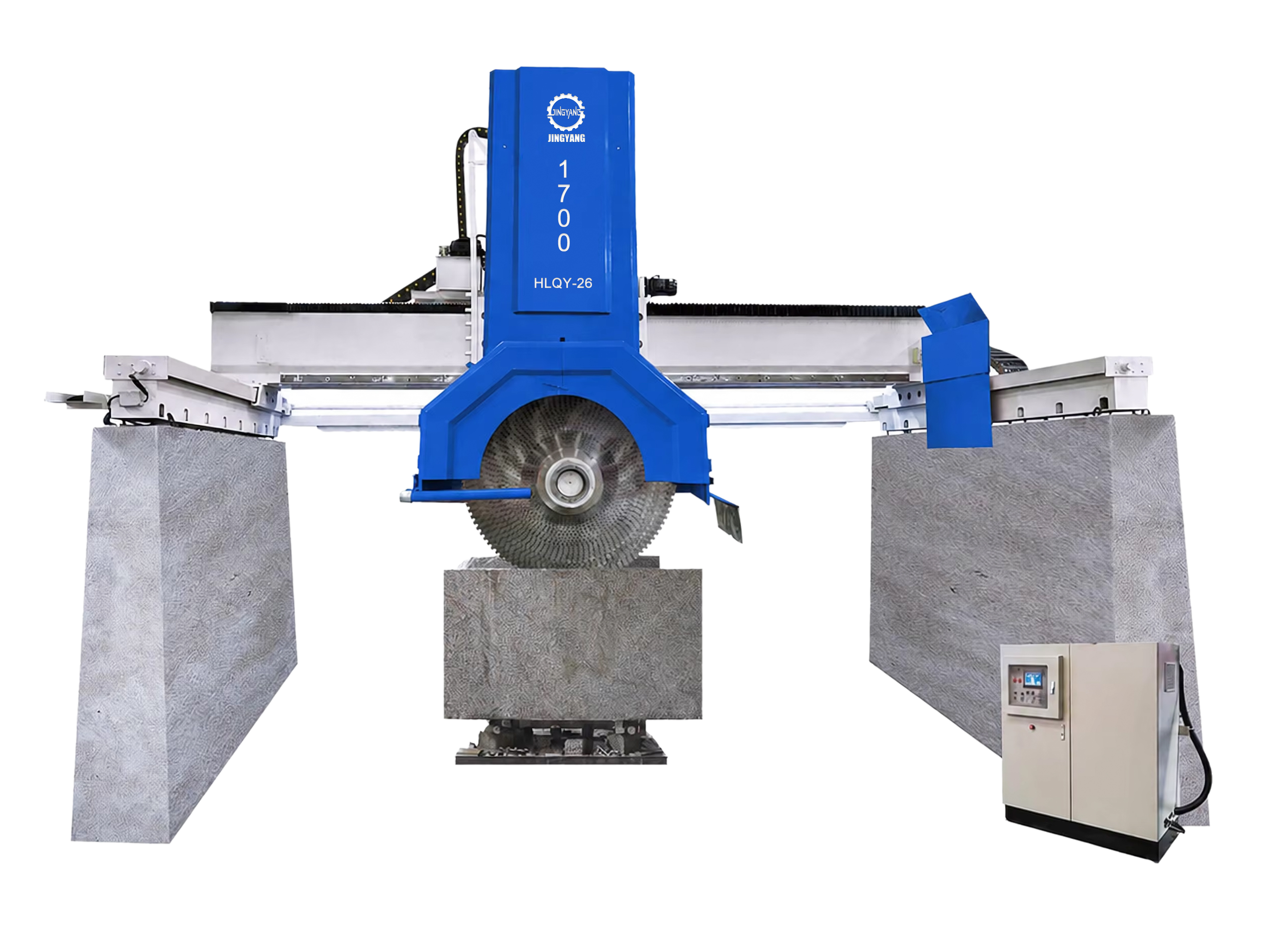
In contrast, an industrial stone cutting machine utilizes high-torque permanent magnet or heavy induction motors delivering 22 kW to 45 kW or more. This raw mechanical drive allows the blade to take aggressive, deep single-pass cuts at high traverse feed rates, doubling or tripling daily square-meter output.
Equally important is spindle arbor rigidity. When a spinning diamond blade hits dense mineral clusters in natural granite, cutting resistance creates high-frequency micro-chatter across the arbor. In a lightweight stone slab cutting machine, this chatter vibrates the thin steel gantry.
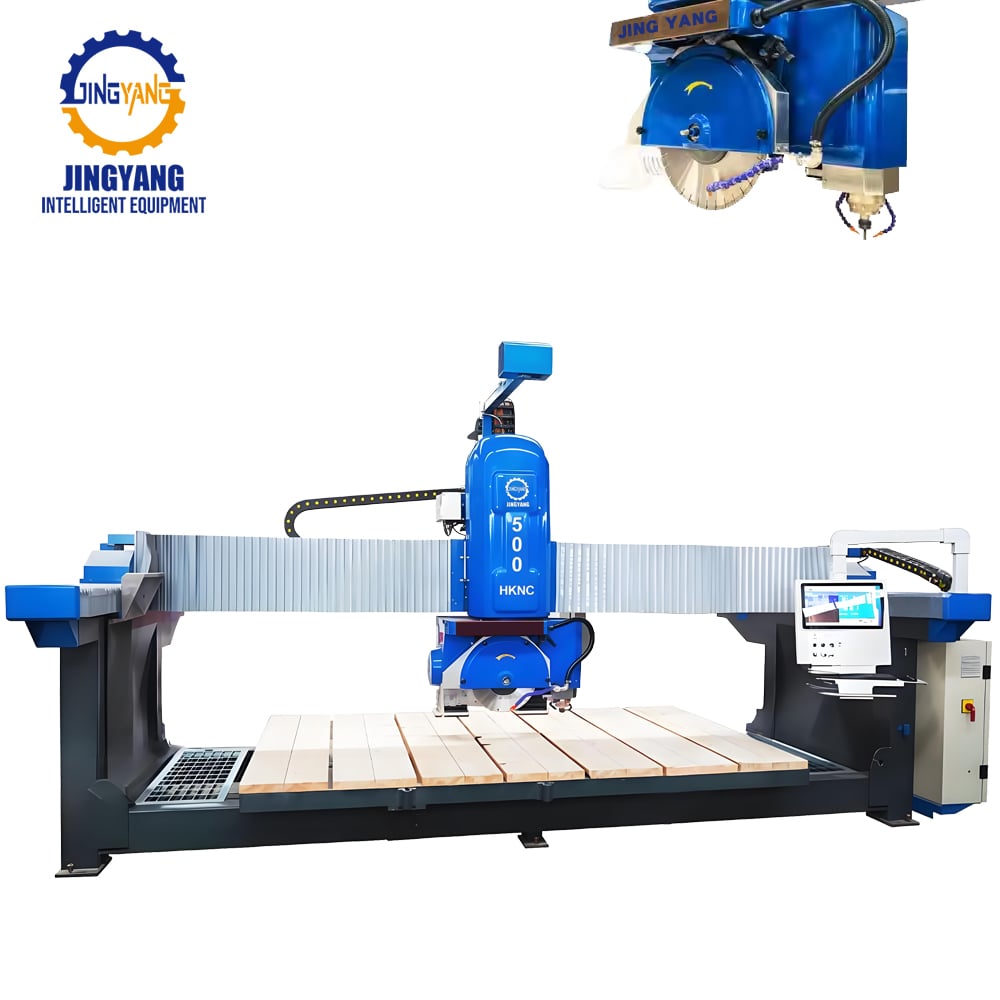
Vibration is the primary cause of premature diamond segment wear, micro-chipping along the stone face, and catastrophic blade core warping. An industrial bridge saw machine with precision heavy-duty spindle bearings stabilizes the blade rim, ensuring diamond segments wear evenly. Over a single fiscal year, the reduction in replacement diamond blades alone often recovers a significant portion of the machine's initial capital premium.
Automation, Material Handling, and Labor Bottlenecks
In high-output facilities, the actual sawing process represents only half of the production equation. Material handling, slab loading, scrap management, and workpiece unloading consume valuable clock time. When multiple standard saws run simultaneously, the factory floor becomes congested with forklifts, vacuum cranes, and manual labor teams scrambling to feed each station.
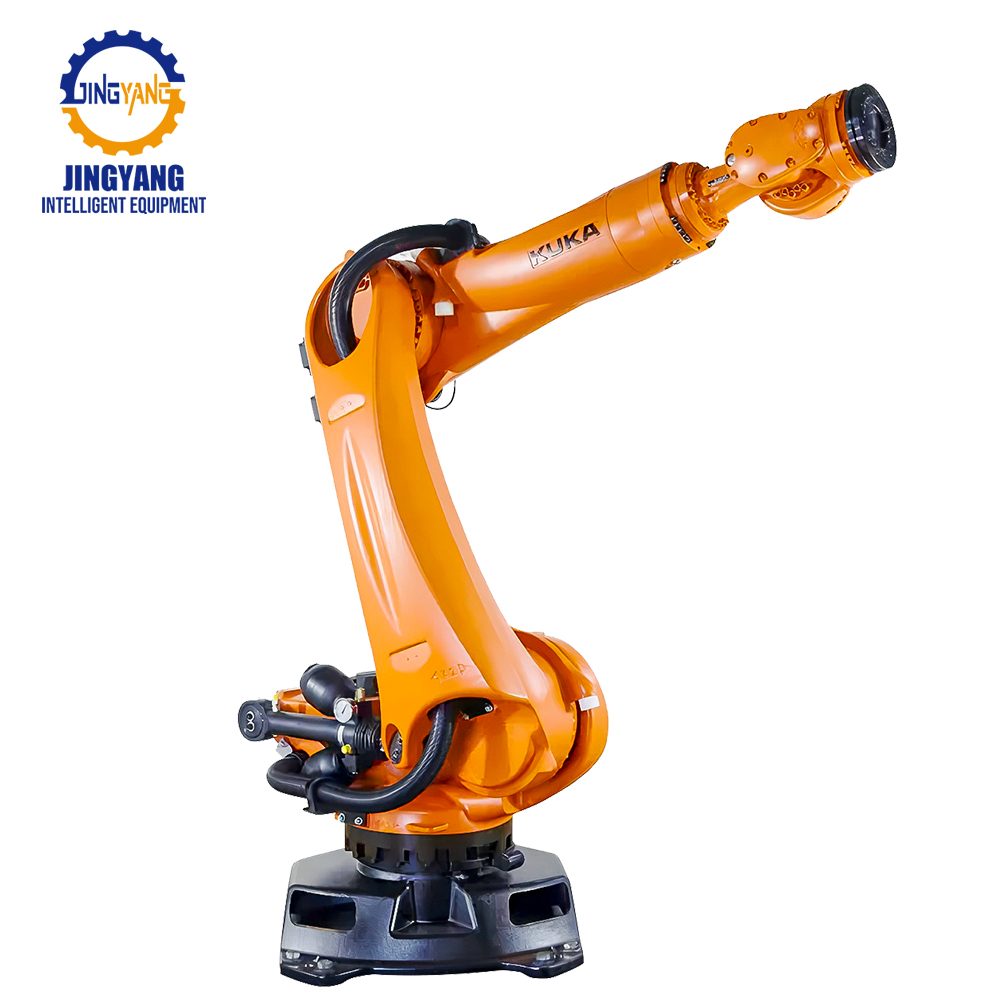
An industrial stone processing machine integrates automation technologies that streamline the material workflow:
- Integrated vacuum manipulator systems: Robotic suction cups mounted directly to the moving crosshead lift, rotate, and reposition cut stone pieces mid-cycle, clearing space for continuous orthogonal cuts without manual operator intervention.
- High-speed digital surface cameras: Overhead imaging systems scan the raw slab on the motorized tilt-table in seconds, allowing the software to automatically nest parts and align seam grain patterns without halting the blade.
- Automated blade management sensors: Electronic touch-probes monitor diamond segment diameter wear and core tensioning dynamically, adjusting step-down depths and alerting maintenance crews before a damaged blade ruins an expensive slab.
- Digital MES/ERP line integration: Factory-wide automation networks download daily cutting orders directly to the machine's industrial controller via Ethernet, eliminating error-prone manual operator data entry at the console.
By consolidating high-speed cutting and automated slab manipulation within a single industrial footprint, high-volume plants cut labor overhead and slash accidental slab-breakage rates during transport.
Total Cost of Ownership: Comparing Real Production Economics
Evaluating machinery based solely on initial purchase price is a dangerous trap for high-volume stone producers. A fleet of lower-priced standard cutting machines frequently incurs massive hidden operating costs through duplicated labor, inflated tooling expenses, and chronic unscheduled downtime.
Consider the reality of operating three standard cutting units versus a single heavy-duty industrial stone cutting machine to achieve an identical output of 600 square meters per day:
- Direct labor costs: Three standard machines require three dedicated operators and multiple material handlers per shift. The automated industrial unit achieves the same square-meter volume with a single operator overseeing the automated cutting cell.
- Factory floor footprint: Multiple machine footprints, safety fences, and slab staging zones consume excessive floor space, driving up warehouse heating, lighting, and leasing overhead.
- Unscheduled downtime exposure: Standard light-duty components—such as unprotected ball screws, light linear trucks, and economy hydraulic solenoid valves—wear out rapidly in abrasive stone slurry. Managing three fragile machines triples the likelihood of an emergency line stoppage halting downstream polishing lines.
Manufacturing high-output stone processing systems requires deep industrial machinery engineering. Jingyang Machinery manufactures high-performance stone equipment—ranging from massive primary quarry extraction systems to advanced industrial bridge saws and multi-axis CNC workstations. Because Jingyang designs heavy-duty machinery for challenging mining and processing environments, its industrial systems incorporate the structural mass, component protection, and mechanical durability required for non-stop high-volume factory operations.
Wrapping Up
For high-volume stone manufacturing facilities, relying on standard cutting equipment leads to rising labor expenses, excessive blade consumption, and unreliable project delivery schedules. Investing in an industrial stone cutting machine provides the structural mass, spindle power, continuous thermal stability, and integrated automation necessary to drive production costs down while keeping output capacity high.
Contact Jingyang Machinery today to review your plant layout, daily square-meter output goals, and material specifications. Our industrial equipment team will provide a comprehensive engineering assessment and configuration proposal tailored to your factory's production targets.