
 EN
EN



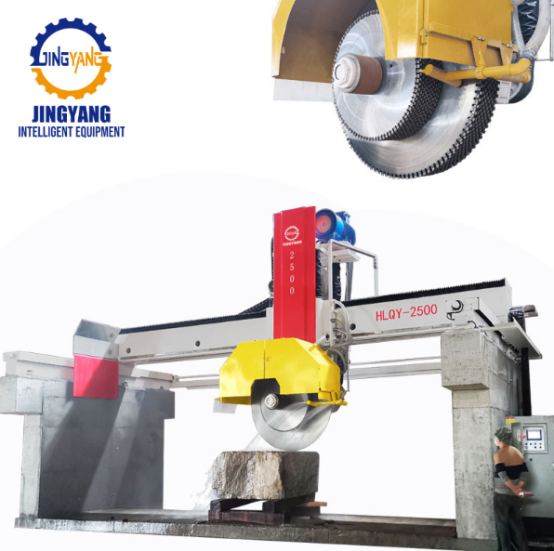
Why Large Slab Shops Look Beyond Single Blade Cutting
Large slab production runs on repeatability. A gang saw or wire saw may reduce the block, but the step that decides how many saleable slabs reach polishing often comes down to the multi blade granite cutting machine. Single blade saws still handle short runs and odd shapes, but once orders shift toward repeated granite slab sizes, single blade cutting shows its limits. Each pass adds handling, alignment checks, and repositioning. A multi blade setup cuts several slabs in one pass, yet the deeper benefit is process stability. When blade spacing and coolant flow are controlled together, the saw becomes a pacing tool for the whole plant.
Throughput Gains That Come From Balanced Blade Loading
The headline benefit is higher output, but the useful gain comes from balanced blade loading. Granite is abrasive, and a block can have hard knots and color bands that change cutting resistance across the width. If one blade works harder than its neighbors, the head can deflect and slab thickness drifts. A well-built multi blade machine uses rigid holders, stable hydraulic feed, and segmented coolant delivery to keep each blade in a similar load range. At one slab plant (for example, a G603 granite operation in southern China), a team replaced two single blade circular saws with a 16 blade machine. The first week focused on mapping feed rates by block zone. By week three, slab rehandling had dropped and sorting moved closer to the saw. Output rose, but fewer rejected slabs after polishing mattered more.
A multi blade setup changes the production picture in a few clear ways. It makes several cuts in a single pass instead of one, which raises throughput without adding repositioning cycles. It holds slabs in a tighter thickness band, so the polishing line removes less material and epoxy filling drops. It needs fewer people at the saw, freeing labor for sorting and packing. And it cuts rehandling, which lowers edge-chip risk. The exact figures depend on block size, blade pack, and plant layout, so buyers should confirm them on a cutting trial with their own granite.
Slab Quality and Dimensional Consistency
Quality starts at the saw. If thickness varies too much, the polishing line removes more material, which can expose pits or change color response. ASTM C615 groups granite dimension stone tolerances by application, and that logic applies on the floor. Multi blade cutting helps because all blades share one pass, one beam, and one feed command. When set correctly, the slabs come out as a matched set. That consistency matters for bookmatched projects, large floor runs, and tight architectural joints. The limitation is that multi blade systems reward preparation. Blade tension, flange condition, and slurry concentration must be checked before the block is pushed. A worn blade can pull the whole set out of tolerance. The benefit is real, but it depends on maintenance discipline.
Labor, Safety, and Downstream Flow
Labor savings are often listed as a top benefit, but the accurate story is labor reallocation. A multi blade machine reduces how often an operator indexes a block or slab. Fewer people stand in the saw zone, and exposure to moving equipment, coolant mist, and heavy lifting drops. Those freed hours move to sorting, epoxy filling, and packaging. Less rehandling means fewer crane picks and less edge damage. If the saw delivers slabs in a steady sequence, polishing runs with fewer changeovers. The catch is that a multi blade machine needs a clear production plan. Mixing many small orders with different widths can eat the gain through setup time. Best results come when blocks are grouped by color and target slab size, so the blade pack stays fixed longer.
Where the Technology Makes Sense and Where It Does Not
A multi blade granite cutting machine is not a universal answer. It shines in large slab production where granite blocks are relatively consistent, order sizes repeat, and downstream finishing is organized. It makes less sense for one-off countertops or very thick sections with special blade needs. The machine also demands more electrical and hydraulic support, and power supply, coolant treatment, and foundation conditions matter. In older plants, upgrading surrounding infrastructure can cost as much as the machine. A practical evaluation should look at three numbers: slabs needed per block, how long the blade pack can stay fixed, and how much rework happens after sawing. If those numbers point to repeatable granite slab work, the multi blade approach usually pays back through consistency and flow. If the mix is highly variable, a single blade or wire saw may remain the better tool.
Choosing a System That Fits the Quarry to Slab Workflow
The most useful way to compare suppliers is to look at the whole workflow, not just the saw head. A machine can have a strong frame and still underperform if block handling, blade alignment, and coolant are not matched. Buyers should ask for cutting trials with the actual granite type, not a generic sample. They should also check how blade spacing is adjusted, how quickly a worn blade can be isolated, and how the control system records feed pressure. Jingyang has built its reputation around quarry equipment and stone processing machinery, with manufacturing and quality control experience that supports this kind of integration. For slab producers, the real benefit of a multi blade granite cutting machine is not one impressive number. It is a calmer, more predictable path from block to finished slab, with less rework and better stone use.